Yogyakarta is warm all year, with daytime temperatures around 30°C and nights in the low twenties. What changes is the rain. The dry season runs roughly from May to October and the wet season from November to April, with the heaviest downpours usually between December and February.
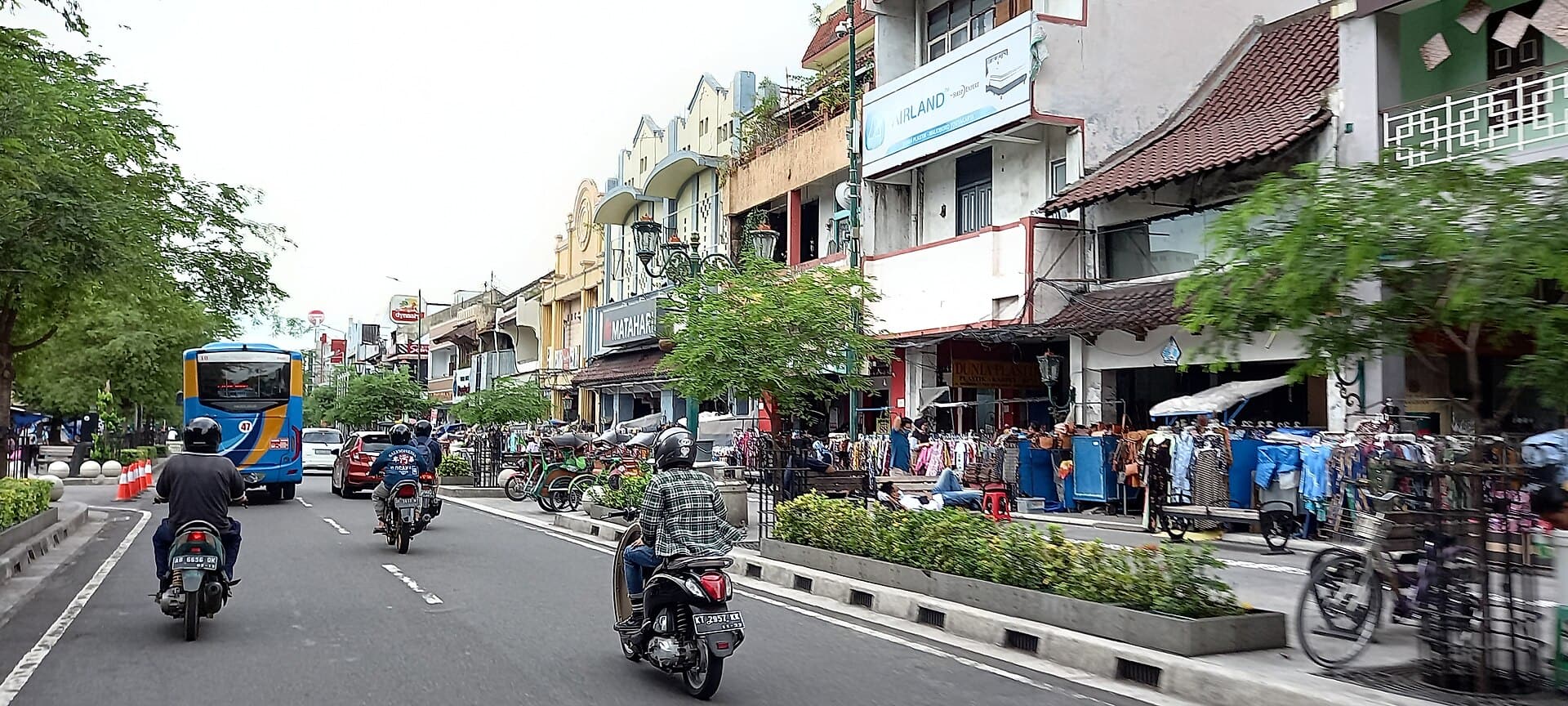
For Malioboro itself you can come in any month: the arcades give shelter, and showers tend to arrive in the afternoon and pass. The season matters more for what you combine with it — sunrise at Borobudur, the open-air Ramayana Ballet, the light beam at Jomblang and the jeeps on Merapi are all better in the dry months.
Month by month
| Months | Weather | Crowds | Verdict |
|---|---|---|---|
| January–February | Wettest months; frequent heavy showers | Quiet after New Year; busy at Lunar New Year | Good for bargains and the Chinese Culture Week in Ketandan |
| March–April | Rain easing; humid | Moderate; watch the dates of Ramadan and Eid | Pleasant if you avoid the Eid week |
| May–June | Start of the dry season; clear mornings | Rising; school holidays from mid-June | Excellent, especially May |
| July–August | Driest, slightly cooler nights | Peak season, domestic and foreign | Best weather, biggest crowds; book ahead |
| September–October | Dry turning to first showers | Moderate | Our favourite balance of weather and space |
| November–December | Rainy season returns | Quiet until the Christmas–New Year rush | Fine with an umbrella; very busy in the last week of December |
The best time of day
- 8:30–11:00: Pasar Beringharjo and the batik shops, before the heat. The Kraton is also a morning-only visit.
- 11:00–15:30: the hottest hours. Use them for a museum, a batik class, lunch or your hotel pool.
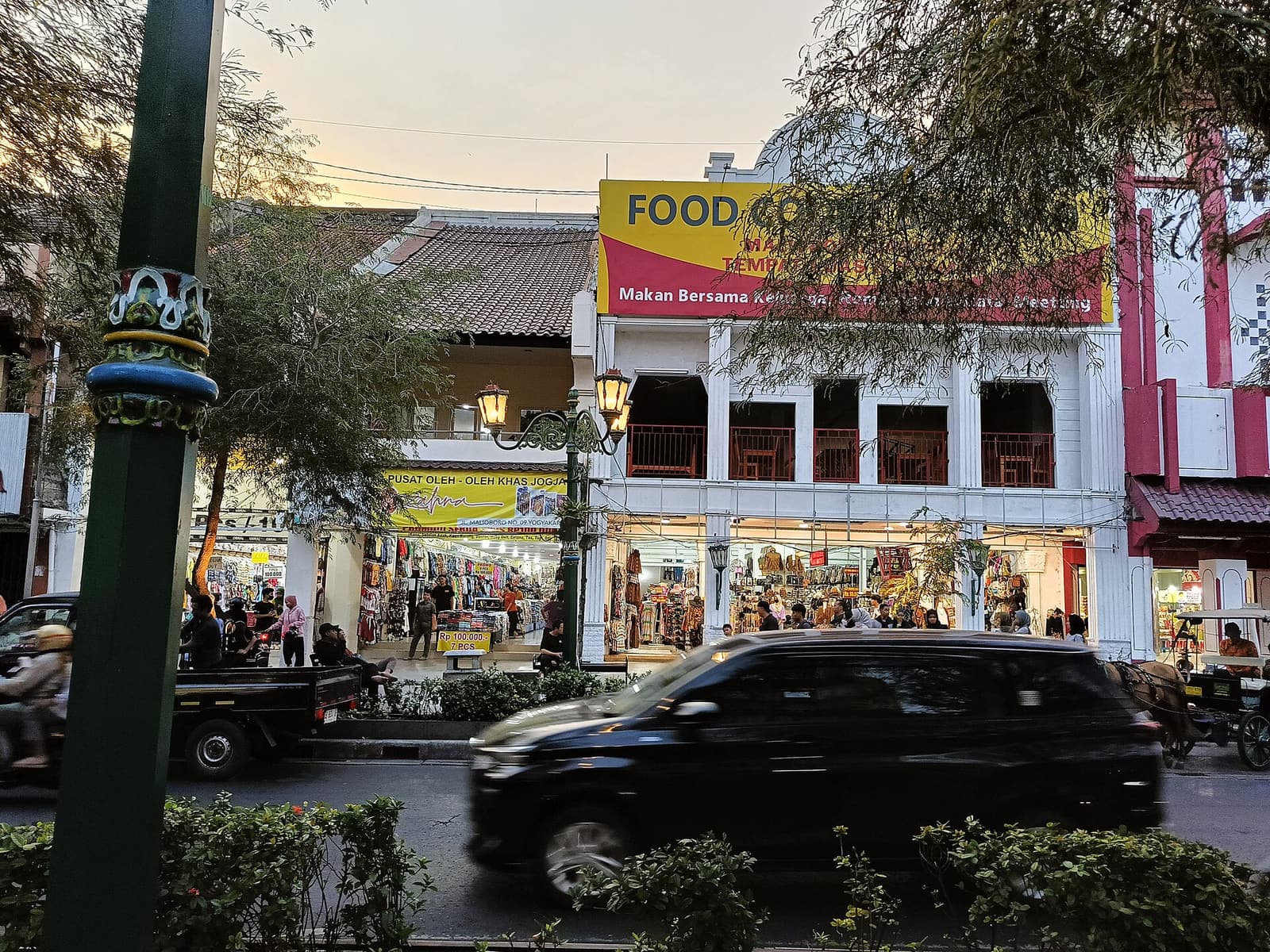
- 16:30–18:00: the street wakes up; good light for photographs at Titik Nol.
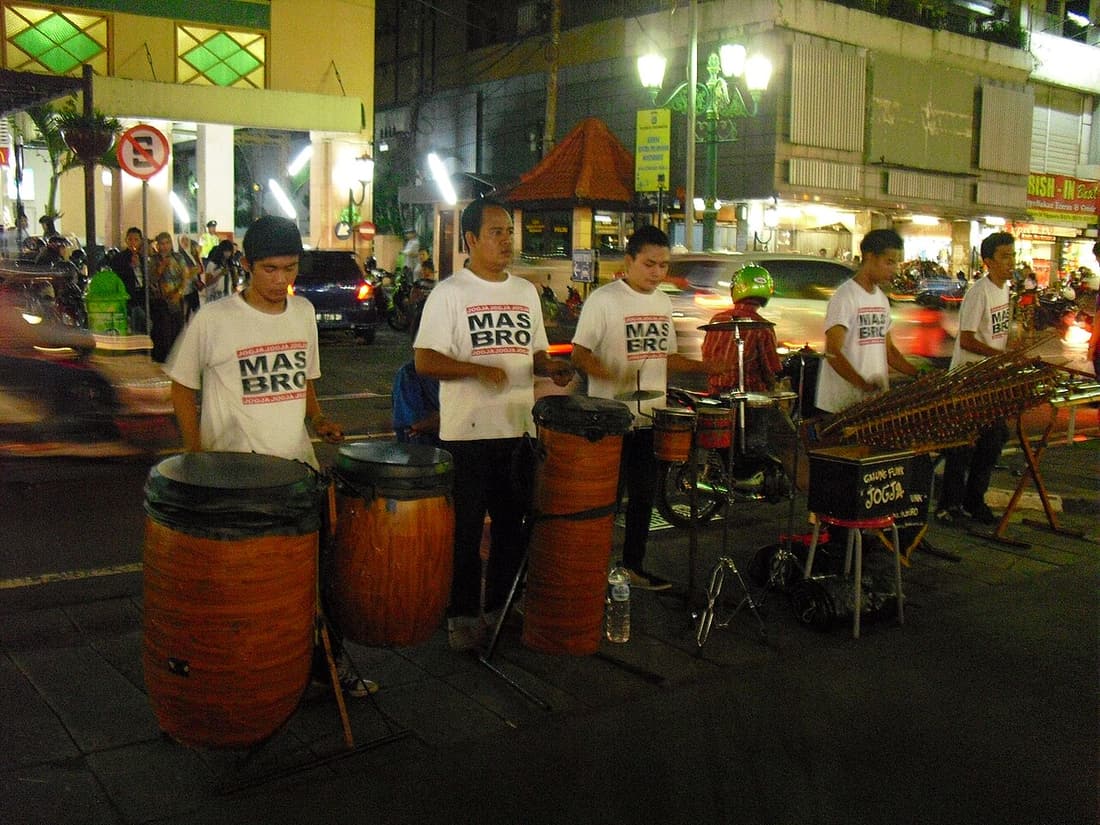
- 18:00–21:00: the usual pedestrian hours, with musicians, food stalls and the biggest crowds.
- After 21:00: shops begin to close, but lesehan and angkringan keep going late.
When it is most crowded
- The Eid al-Fitr (Lebaran) holiday week, whose dates move about eleven days earlier each year. The street is packed and hotel prices jump.
- Christmas to New Year, peaking on New Year’s Eve.
- Indonesian school holidays, roughly mid-June to mid-July.
- Long weekends and Saturday nights throughout the year.
During Ramadan the daytime is quieter and some food stalls open only towards sunset, when the street fills for the breaking of the fast.
Festivals and events
- Sekaten and Grebeg Maulud: the court’s celebration of the Prophet’s birthday, with sacred gamelan at the Great Mosque and a procession of rice-mountain offerings from the Kraton. Dates follow the Islamic calendar.
- Yogyakarta Chinese Culture Week: lanterns, lion dances and food in Ketandan, around Cap Go Meh after the Lunar New Year.
- Mid-year arts season: the city’s culture festival and contemporary art fairs usually fall between June and August.
- The city’s anniversary on 7 October: often marked with a night carnival of wayang-themed floats around the Tugu monument.
- Selasa Wage: every 35 days, a calmer, traffic-free Malioboro.
Programmes and dates change every year; check the city tourism office’s announcements close to your trip.
Rainy-season tips
- Plan outdoor sights for the morning and keep afternoons flexible.
- The arcades on both sides of the street let you walk almost its whole length under cover.
- Good wet-weather options: a batik or cooking class, Fort Vredeburg, the Kraton’s museums.
How far ahead to book
Outside the peaks, a few days is plenty for hotels and tours. For July, August, the Eid week and the year-end, reserve accommodation a month or more ahead, and Borobudur climb-up slots as soon as your dates are fixed.