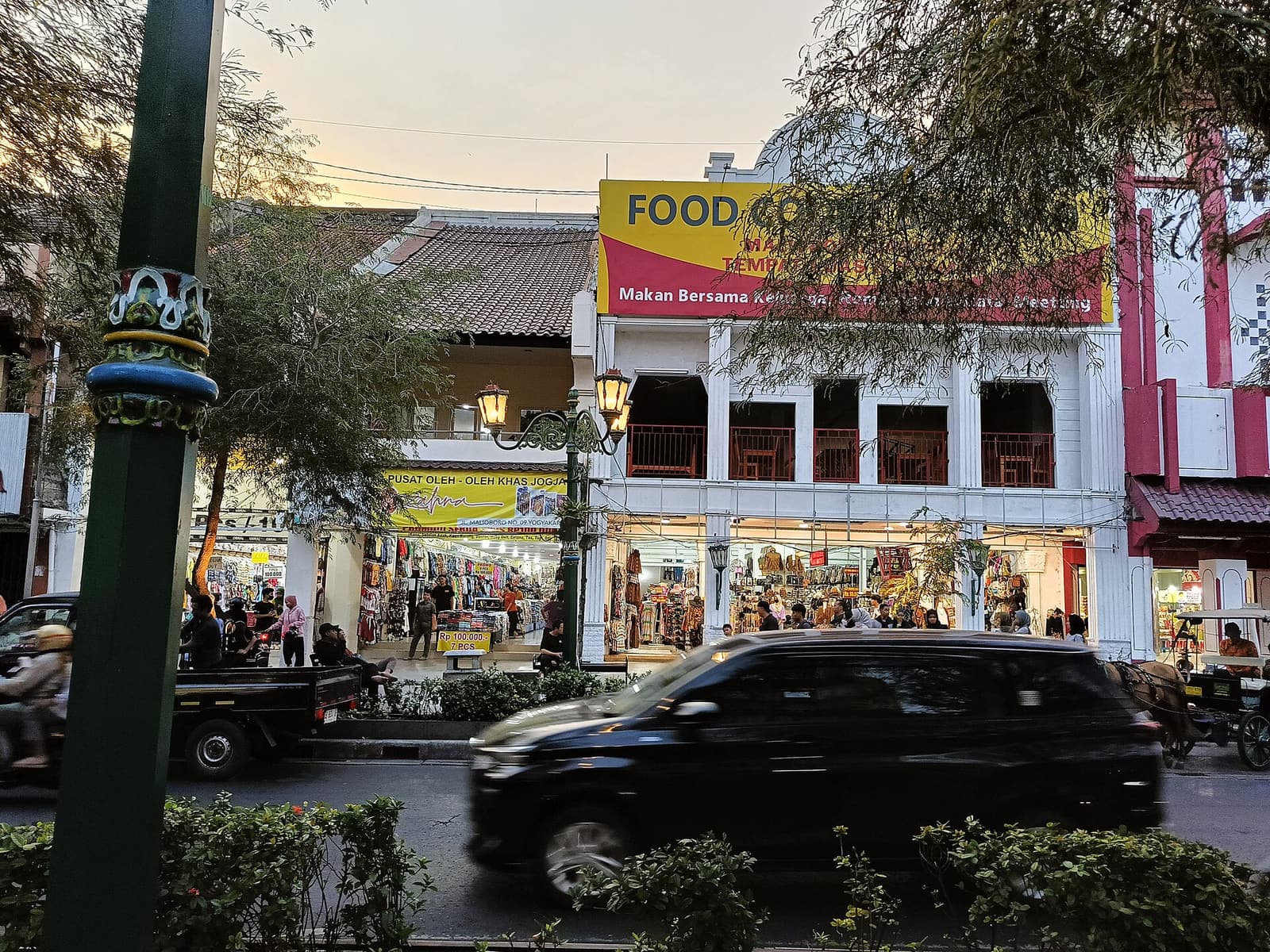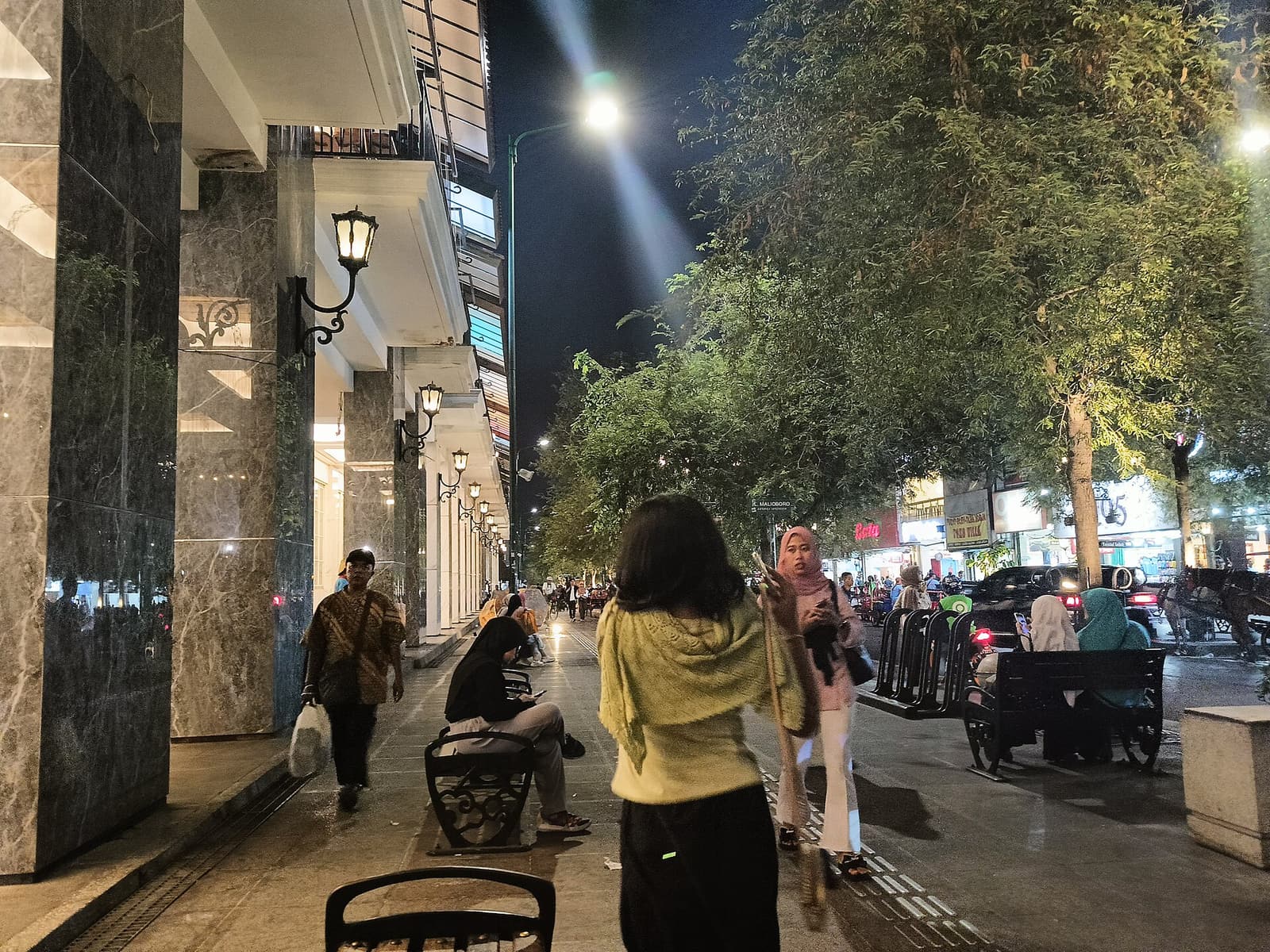
Malioboro is the first place most visitors to Yogyakarta go and the place they keep coming back to in the evening. It is noisy, commercial and crowded — and it is also the ceremonial road of a living sultanate. This guide covers both sides.
A short history
Yogyakarta was founded in the 1750s, when the Treaty of Giyanti split the kingdom of Mataram and Prince Mangkubumi became Sultan Hamengkubuwono I. He laid out his capital on a north–south line between Mount Merapi and the Indian Ocean: the Tugu monument, a straight royal road, the northern square, the Kraton, the southern square and the hunting stage of Panggung Krapyak. Malioboro is the middle of that road.
The Dutch built Fort Vredeburg and the Resident’s house (now Gedung Agung) beside it; Chinese merchants settled at Ketandan; the railway arrived in the 1880s and hotels followed. From 1946 to 1949, when Yogyakarta was the capital of the Indonesian republic, the street was at the centre of national life. In September 2023 UNESCO inscribed “the Cosmological Axis of Yogyakarta and its Historic Landmarks” as a World Heritage Site.
Malioboro at a glance
| Topic | What to know |
|---|---|
| Where | Central Yogyakarta, Java; from Tugu station south to Titik Nol Kilometer |
| Length | About 1 km for Jalan Malioboro; about 1.5 km station to Titik Nol |
| Cost | Free to walk; museums and the Kraton charge small entrance fees |
| Best hours | Morning for the market; 17:00 onwards for the street |
| Pedestrian hours | Usually around 18:00–21:00 daily; subject to change |
| Money | Indonesian rupiah (IDR); ATMs along the street; cash for stalls |
| Language | Indonesian and Javanese; basic English in shops and hotels |
| Time needed | One evening for the street; 2–3 days for the city and temples |
 On and around Malioboro Street
Malioboro Street
Yogyakarta’s famous main street, end to end
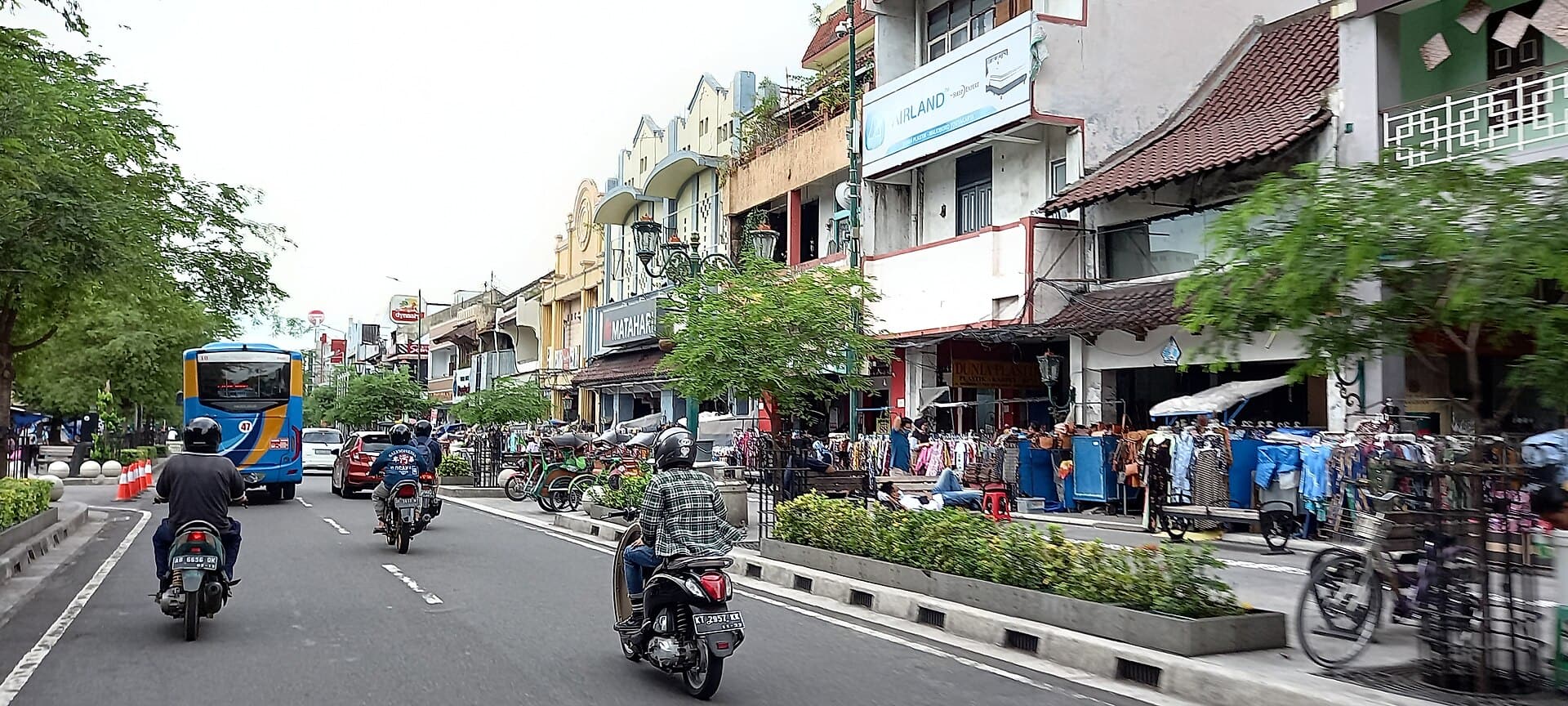
Jalan Malioboro is the spine of Yogyakarta: a straight street of shophouses, arcades, markets and hotels running south from the railway line near Tugu station towards the Sultan’s palace. It is busiest after dark, when the pavements fill with strollers, musicians, becak and horse carts.
 On and around Malioboro Street
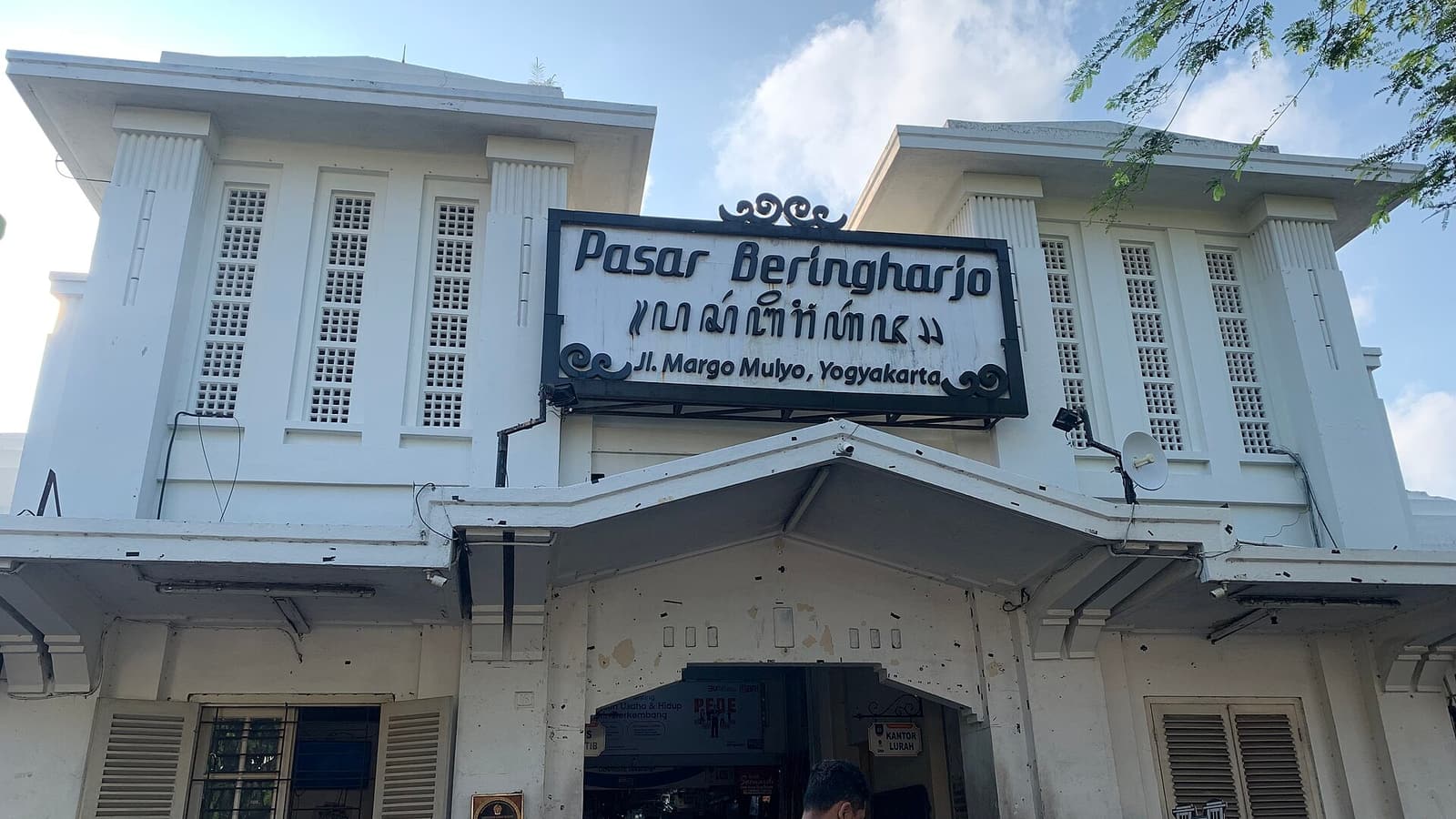
Pasar Beringharjo
The city’s great market, since the 18th century
Yogyakarta’s oldest and largest traditional market stands at the southern end of Malioboro. The front halls are packed with batik at every price; deeper in you find spices, jamu herbs, snacks, basketware and second-hand goods.
 On and around Malioboro Street
Batik Shopping on Malioboro
Tulis, cap or print — and how to tell
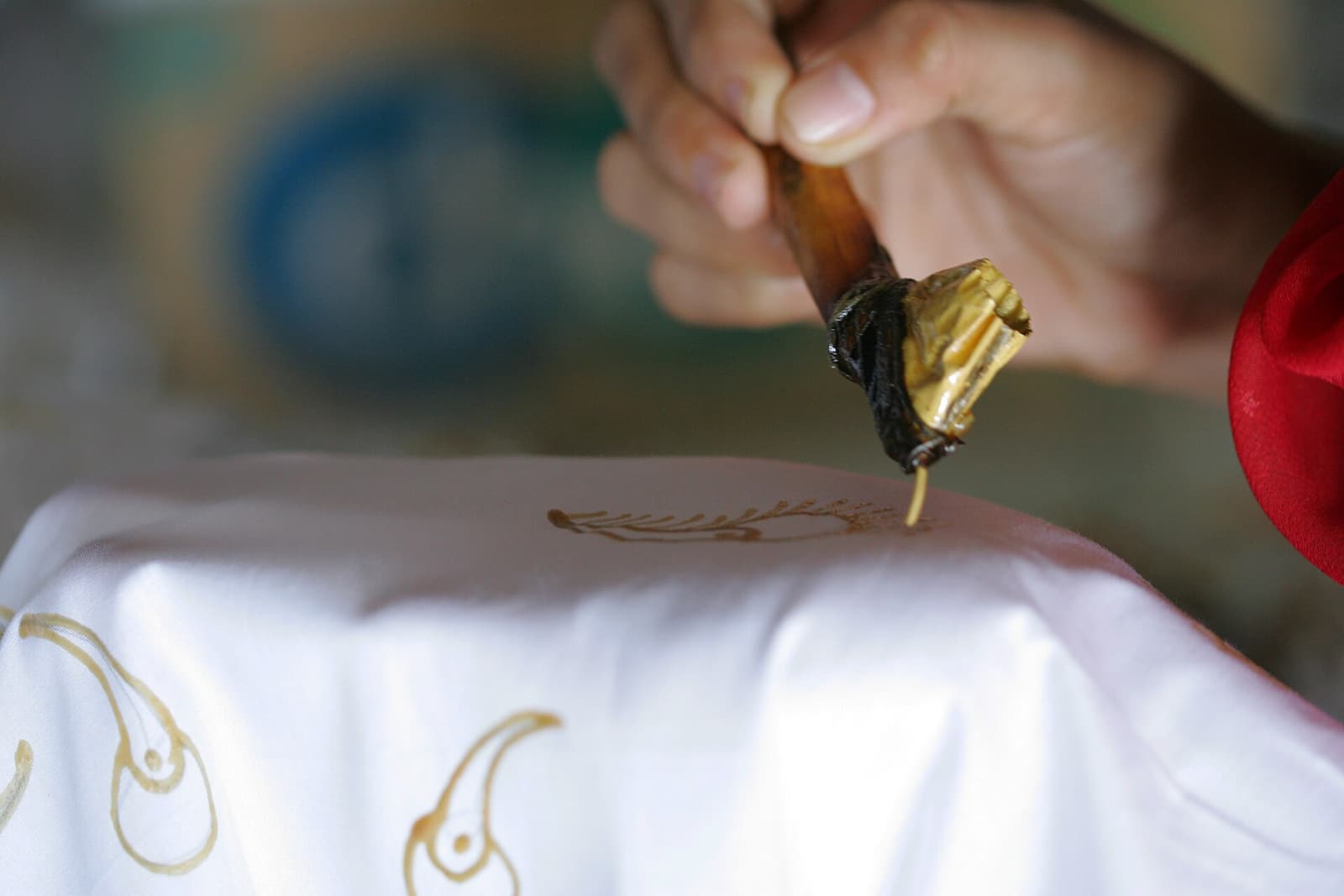
Malioboro is the best-known place in Java to buy batik, from fixed-price stores such as Hamzah Batik to market stalls and street-side racks. Knowing the difference between hand-drawn, stamped and printed cloth saves money and disappointment.
 On and around Malioboro Street
Street Food: Lesehan, Gudeg & Angkringan
Eat on a mat, drink coffee with charcoal
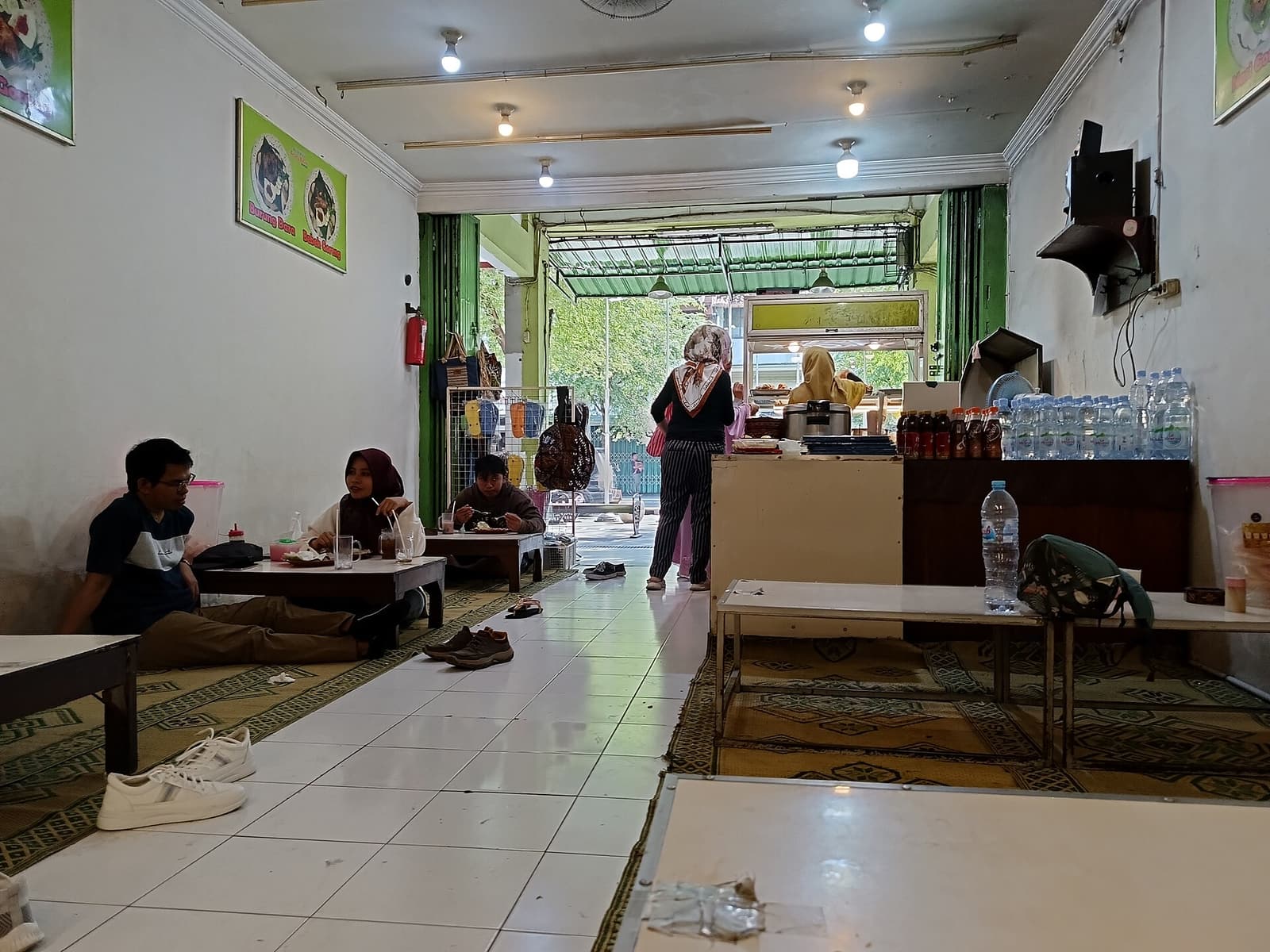
Evenings on and around Malioboro belong to food: lesehan stalls where you sit on mats, plates of sweet jackfruit gudeg, angkringan carts with tiny rice parcels, kopi joss with a glowing coal dropped in, and boxes of bakpia from nearby Pathuk.
A walking route, north to south
- Tugu monument (optional start): the white pillar that anchors the axis. See Tugu.
- Tugu station and Sosrowijayan: cross the railway; the backpacker lanes of Sosrowijayan are on your right.
- The upper street: the grand old hotel, the regional parliament building, the mall and the first batik shops.
- Ketandan gate: the entrance to Chinatown on the left.
- Pasar Beringharjo and Hamzah Batik: the market on the left, the fixed-price emporium on the right, Teras Malioboro 1 beside it.
- Fort Vredeburg and Gedung Agung: the fort and the presidential palace face each other.
- Titik Nol Kilometer: the crossroads where the walk ends — or continues to the Kraton.
Pedestrian hours and the traders’ markets
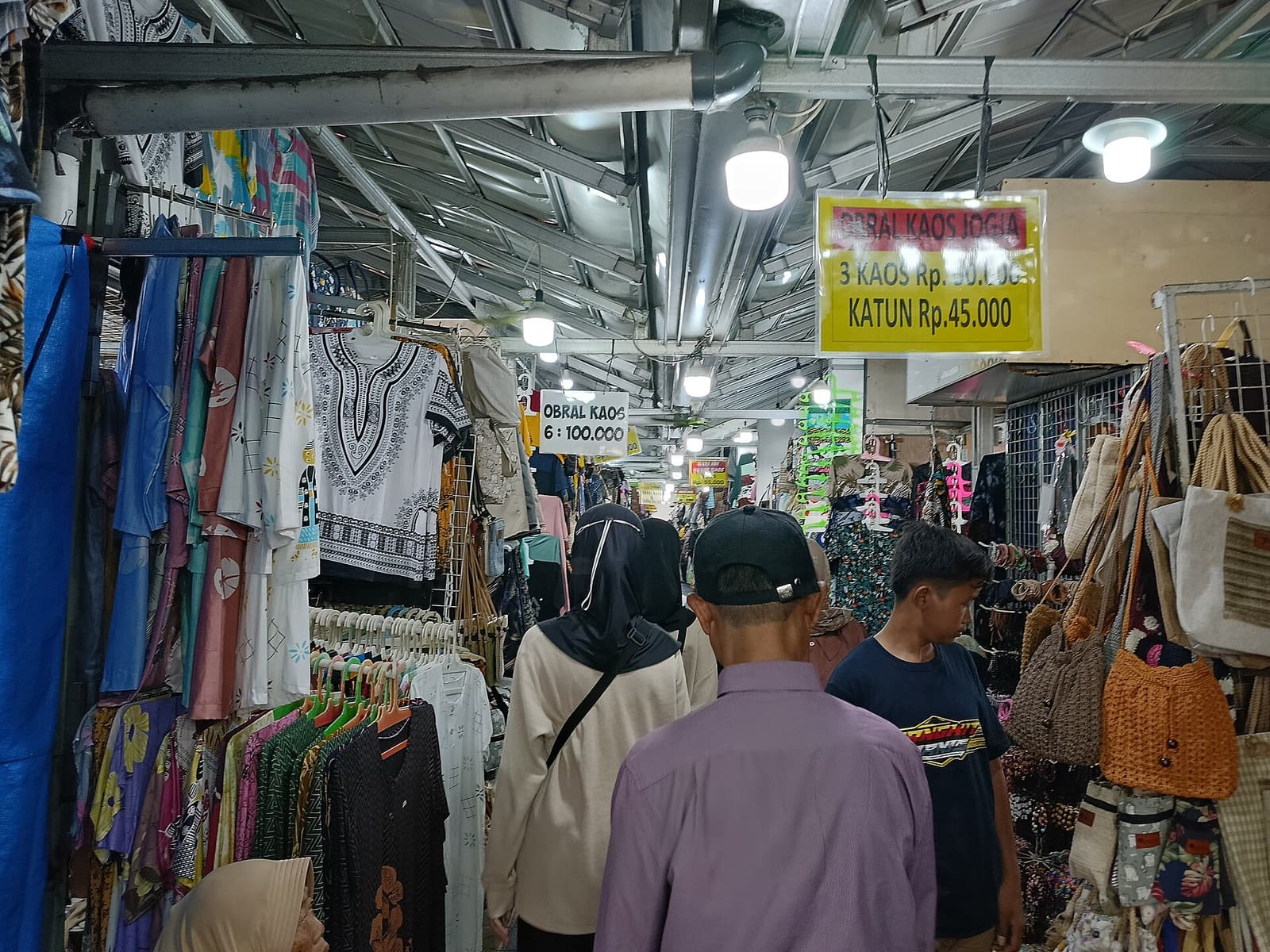
For years Malioboro’s arcades were packed with pavement traders (pedagang kaki lima). In early 2022 the city relocated them into two covered markets, Teras Malioboro 1, opposite Pasar Beringharjo, and Teras Malioboro 2, near the northern end. The second was always meant to be temporary, and its traders have since been moved again to new buildings in the Ketandan and Beskalan lanes just off the street. The policy remains contested and may change further.
Alongside this, private motor vehicles are kept off the street for a few hours each evening — commonly from around 18:00 to 21:00 — with buses, becak, andong and emergency vehicles still allowed. On Selasa Wage, a day that comes round every 35 days, the closure is usually longer. Treat all of these arrangements as current practice, not fixed rules, and check signs when you arrive.
Shopping and bargaining
- Know your batik: hand-drawn tulis, stamped cap or machine print. Our batik guide shows how to tell.
- Check prices at a fixed-price store such as Hamzah Batik before bargaining in the market.
- At stalls, counter with roughly half the asking price and meet in the middle. Keep it light-hearted.
- Other good buys: silver from Kotagede, leather wayang puppets, wooden masks, bakpia and local coffee.
Eating and drinking
Lesehan stalls, gudeg, angkringan carts, kopi joss and bakpia are covered in our street food guide. The one rule that matters: look at the price list before you order.
Touts and scams
- “Art school exhibition, last day today.” It is a commission batik shop. There is no exhibition.
- The almost-free becak ride. A token fare means stops at batik and bakpia shops that pay the driver.
- “The Kraton is closed today, but…” Check at the gate yourself before following anyone elsewhere.
- Unpriced food. Ask for the daftar harga and confirm the price of drinks too.
- Photo characters. People in costumes at Titik Nol expect a tip; agree it before the picture.
None of this is dangerous, and most people you meet are simply friendly. A smile and “tidak, terima kasih” (no, thank you) is all you need.
Safety and health
- Pickpockets work the crowds at weekends and holidays. Wear your bag in front and keep your phone out of back pockets.
- Traffic: cross at marked crossings; motorbikes come from every direction outside the closure hours.
- Heat: midday is hot and humid all year. Drink bottled water and rest in the arcades or the mall.
- Stomach: choose busy stalls and freshly cooked food.
- Yogyakarta is generally a safe, relaxed city, including for solo and female travellers; normal big-city awareness applies.
Money and connectivity
ATMs of the major Indonesian banks line the street and stand inside the mall. Shops and hotels take cards; stalls, becak and markets want cash. Money changers operate on and near Malioboro — count your notes before leaving the counter. Local SIM cards and eSIMs are cheap; free Wi-Fi is patchy.
What to wear and bring
- Light, breathable clothes; shoulders and knees covered for the Kraton and mosques.
- Comfortable shoes or sandals — you will walk more than you expect.
- A small umbrella or rain jacket from November to April.
- Small notes in rupiah, and a tote bag for shopping.
Suggested itineraries
One evening
Arrive at 16:30. Walk south from the station, browse Hamzah Batik, reach Titik Nol for dusk, eat at a lesehan, listen to the musicians on the way back and finish with kopi joss by the station.
Two days
Day 1: Pasar Beringharjo and Fort Vredeburg in the morning, a batik class in the afternoon, a night food walk. Day 2: Borobudur at sunrise and Prambanan in the afternoon; Malioboro again after dark.
Three or four days
Add a morning at the Kraton and Taman Sari with an evening at Alun-Alun Kidul; then choose between a Merapi jeep tour, Jomblang Cave or sunset at Parangtritis, and the Ramayana Ballet at Prambanan.
Etiquette
- Javanese manners are gentle: speak softly, smile, and do not show anger when bargaining.
- Give and receive with the right hand.
- Ask before photographing people, especially court retainers and market sellers.
- Tip street musicians if you stop to watch.