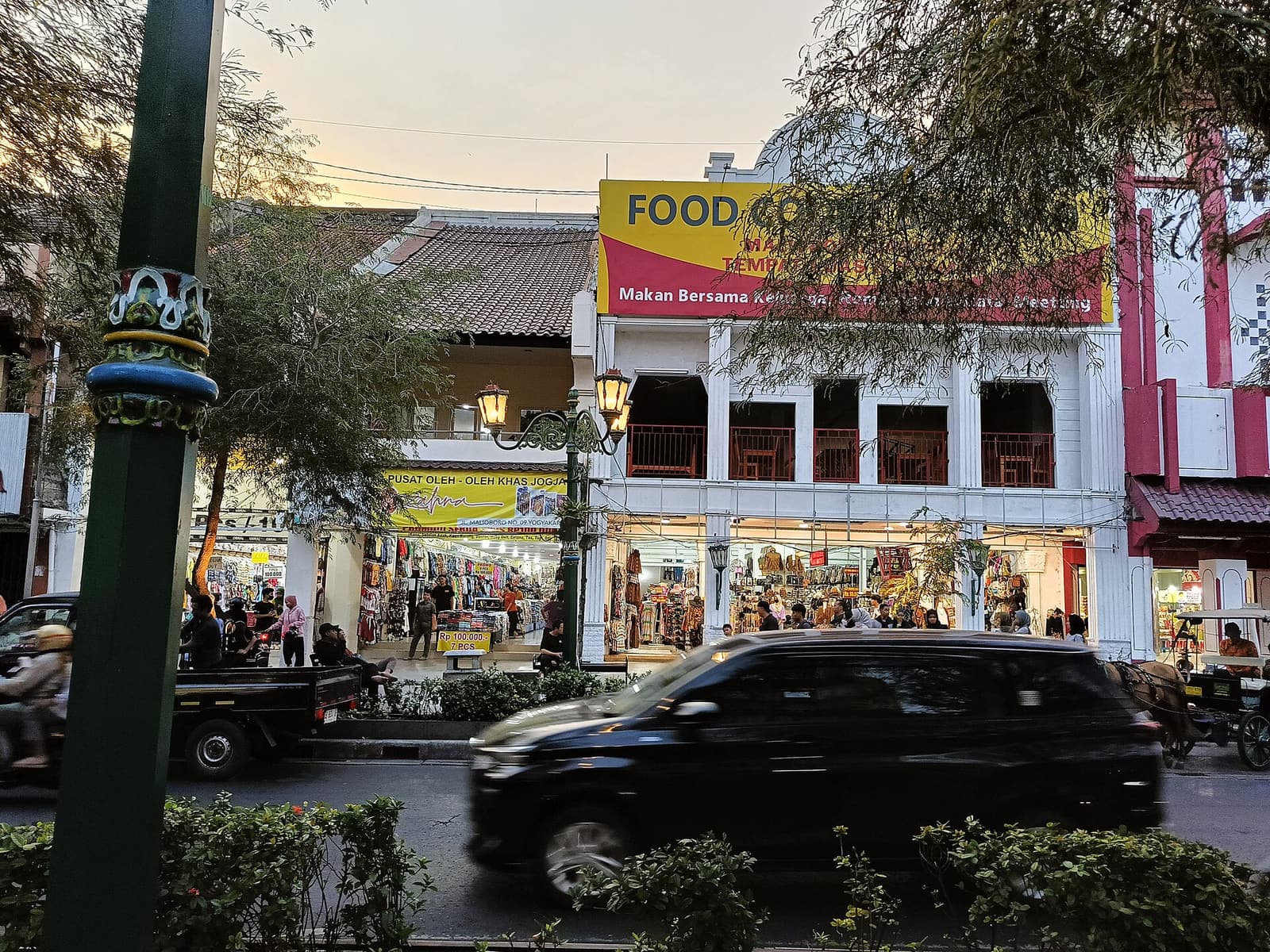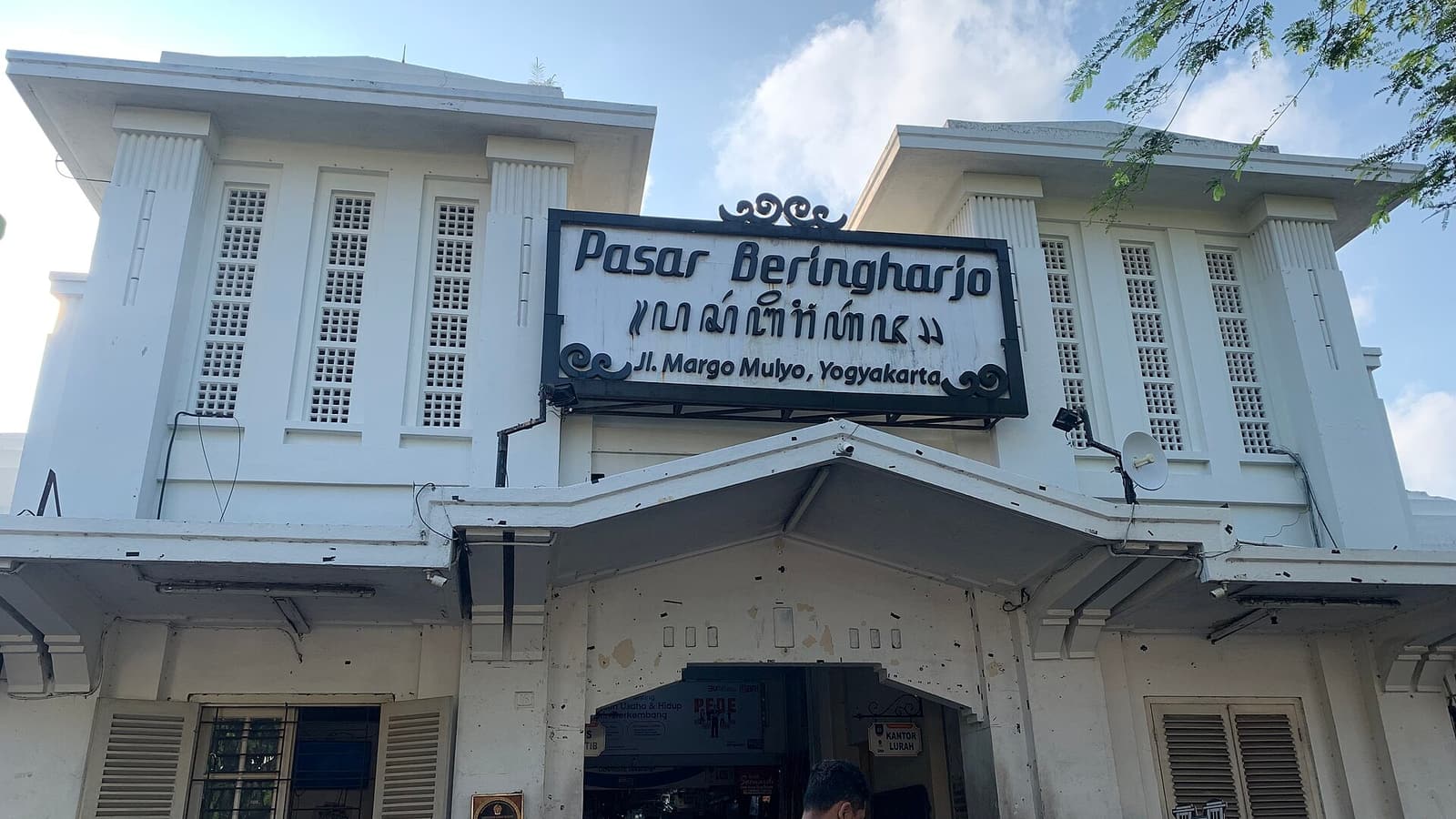
Pasar Beringharjo is the central market of Yogyakarta and has stood on this spot, just south of Malioboro proper, since the founding years of the sultanate in the 18th century. It is one of the fixed points of the traditional Javanese city plan: palace, square, mosque and market. The white building you see from the street dates from the 1920s, with later extensions behind.
The name joins bering — the banyan trees that once covered the site — and harjo, well-being. Inside, the market is a maze over several floors. The western halls nearest the street are devoted to batik and clothing; further east come spices, dried goods, jamu ingredients, kitchenware, basketry and, upstairs, antiques and second-hand stalls.
What to see and do: Pasar Beringharjo
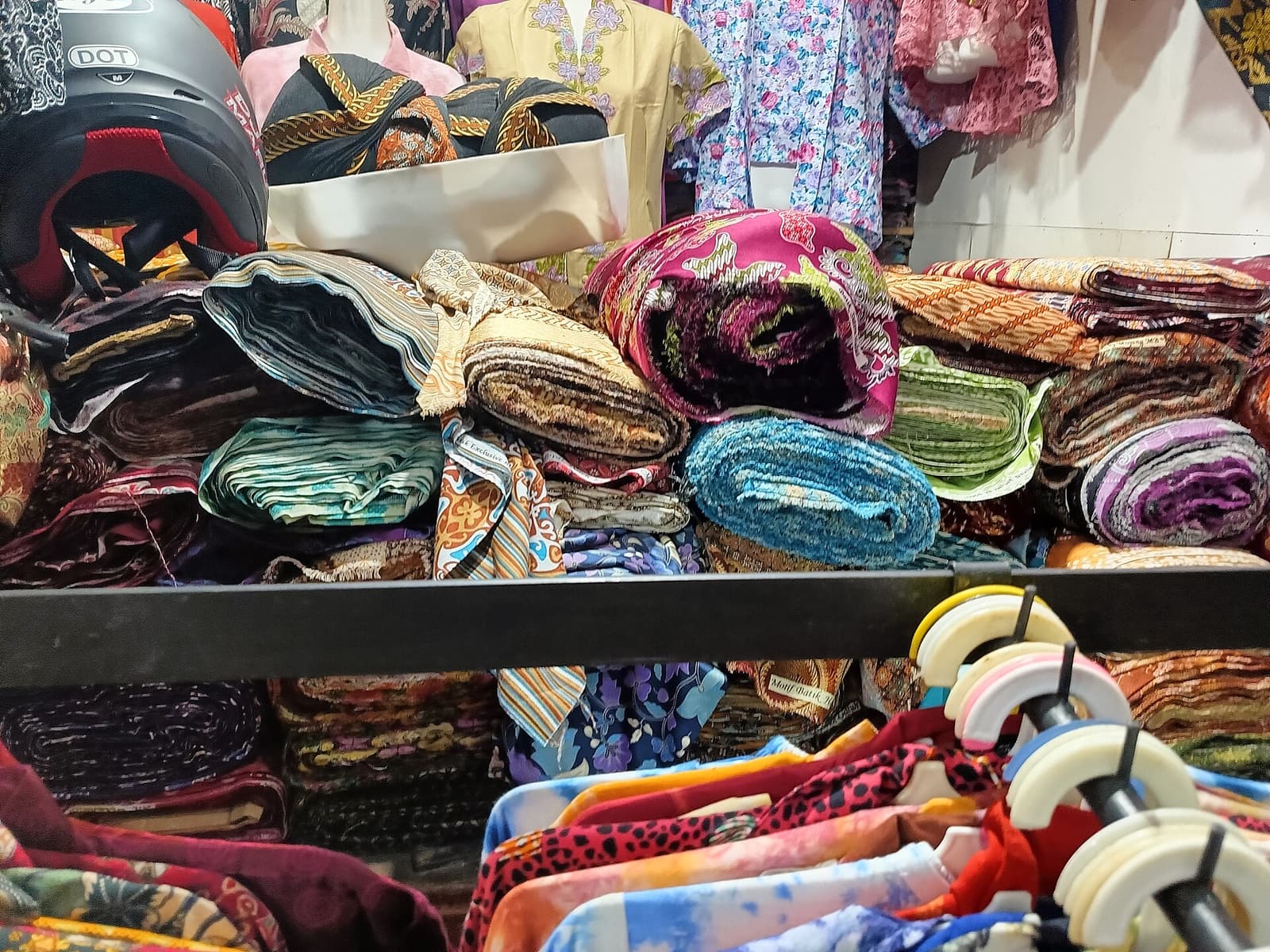
Hunt for batik
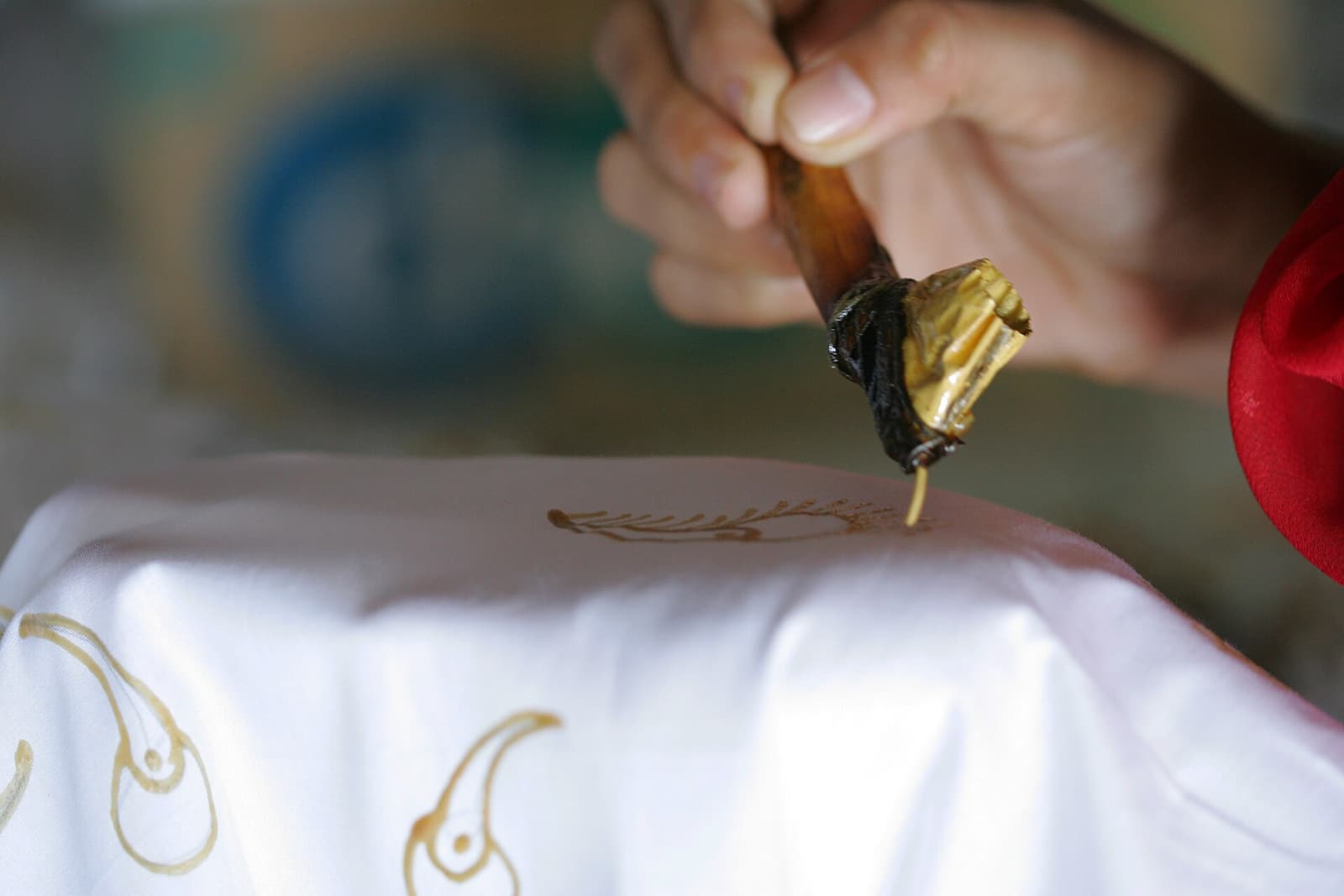
Hundreds of stalls sell shirts, dresses, sarongs and cloth by the metre. Most of what is cheap is printed or stamped; ask “tulis, cap atau printing?” and read our batik guide first.
Follow your nose to the spices
In the eastern section sacks of turmeric, ginger, galangal, cinnamon and dried chillies sit beside the roots and barks used for jamu, the Javanese herbal tonic. Some stalls mix a glass on the spot.
Snack like a local
Around the entrances women sell pecel (vegetables in peanut sauce), sate kere, es dawet and traditional sweets from baskets. It is a cheap and good breakfast.
Climb to the upper floors
Upstairs you find second-hand books, old coins, brassware and oddments — fewer tourists and more browsing.
How to get to Pasar Beringharjo
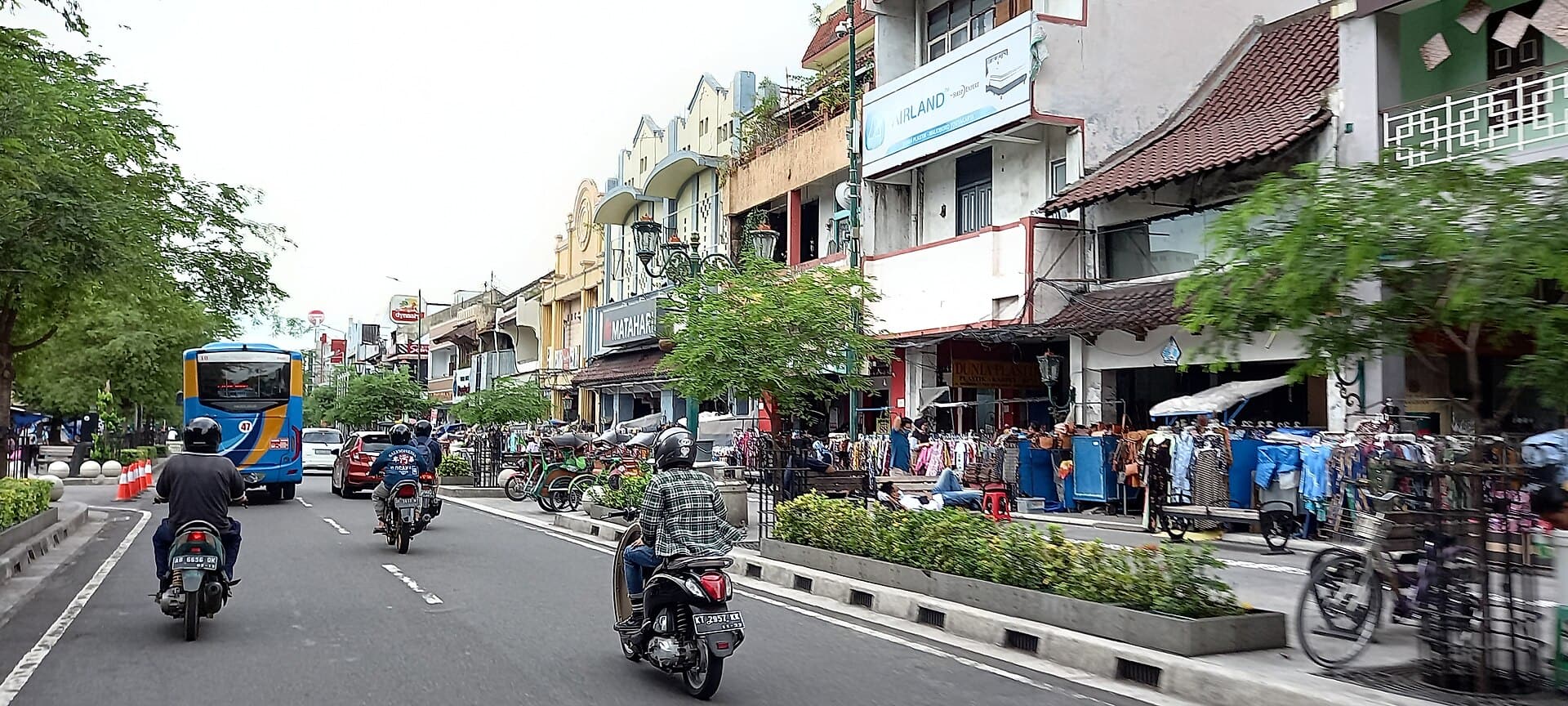
- On foot: walk south along Malioboro; the market is on the left (east) side just after the street changes name to Jalan Margo Mulyo, opposite Hamzah Batik.
- By becak: any driver knows it. Agree the fare before setting off.
- By bus: the southern Trans Jogja shelters on Malioboro are a short walk away.
Insider tips
- Go in the morning: stalls open from around 8:30–9:00 and most of the market winds down by late afternoon.
- Bargaining is expected at stalls. Start well below the first price, stay friendly and be ready to walk away.
- Carry small notes and keep your bag in front of you in the narrow aisles.
- Ignore “guides” at the door who offer to take you to a special batik gallery elsewhere.
Best tours & tickets for Pasar Beringharjo
These top-rated experiences are an easy way to enjoy Pasar Beringharjo from a base on Malioboro:
 Cooking class from $37
Yogyakarta: 3-Hour Cooking Class with Market Tour
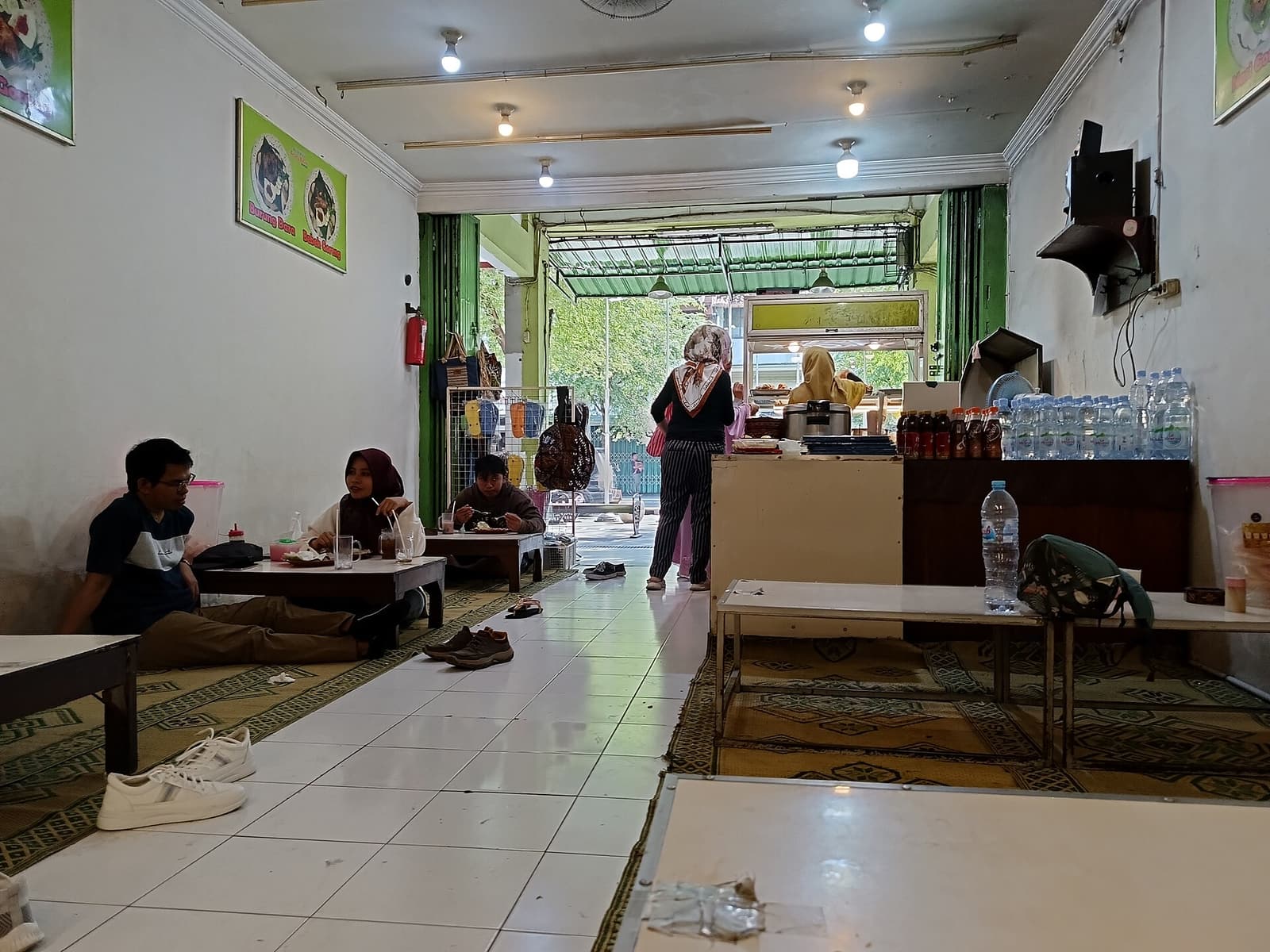
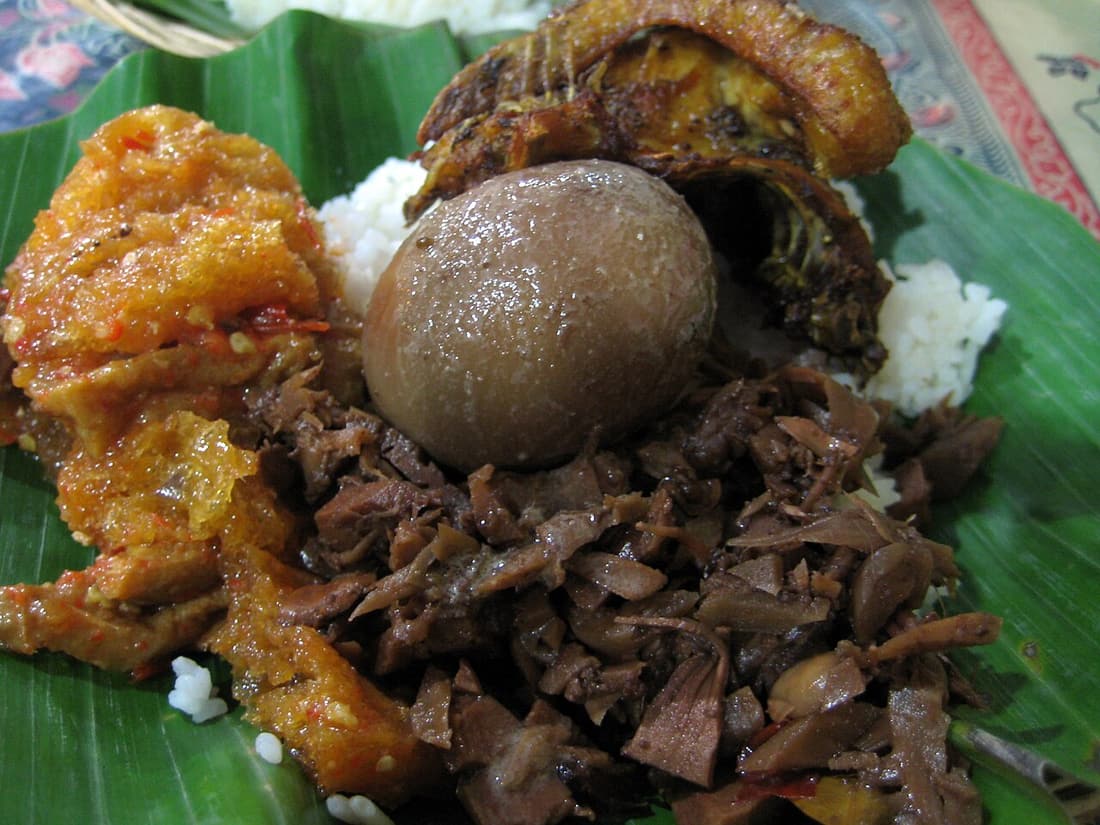
Start at a traditional market to buy spices and vegetables, then cook several Javanese dishes and eat what you have made. A well-reviewed way to understand the sweet, coconut-rich flavours you meet at every lesehan and warung in town.
- Shop for ingredients at a traditional market
- Cook Javanese dishes with a local teacher
- More than a hundred reviews
 Guided walk with tastings from $15
Yogyakarta: Guided City Walk and Food Tour
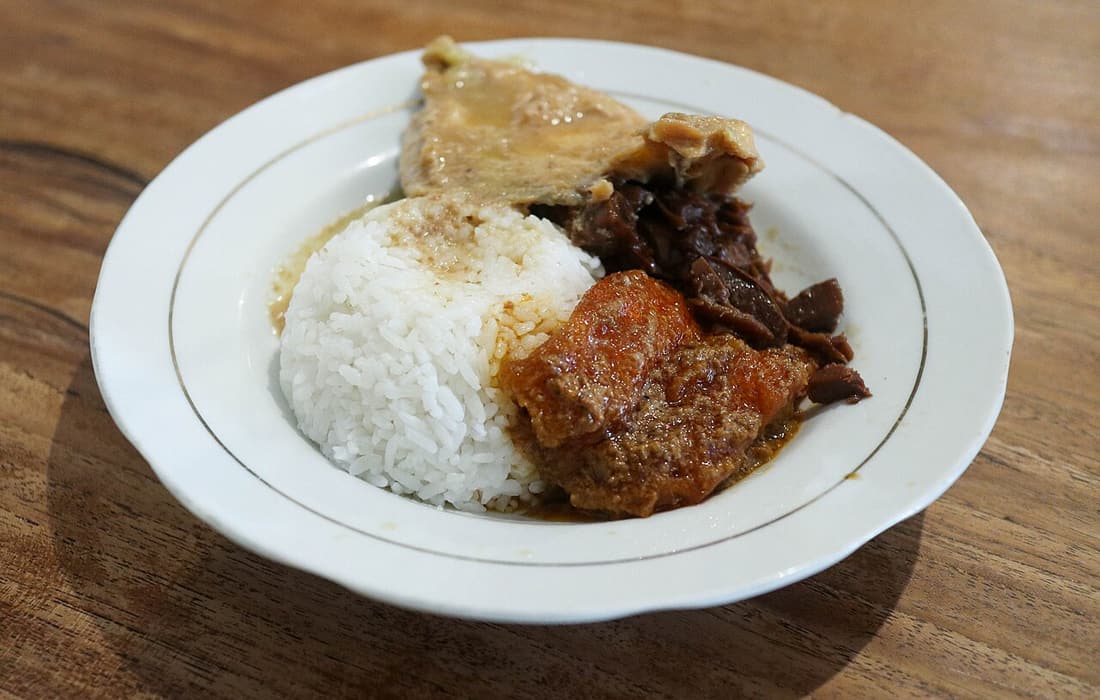
A guided walk that mixes the old city with food stops, so you learn how Yogyakarta fits together while tasting local snacks and dishes along the way. A good choice if you want orientation and eating in a single outing rather than a pure food crawl. Start times and the route vary by option, so read the listing before you book.
- City sights and local dishes in one walk
- Small group led by a local guide
- Several hundred five-star reviews
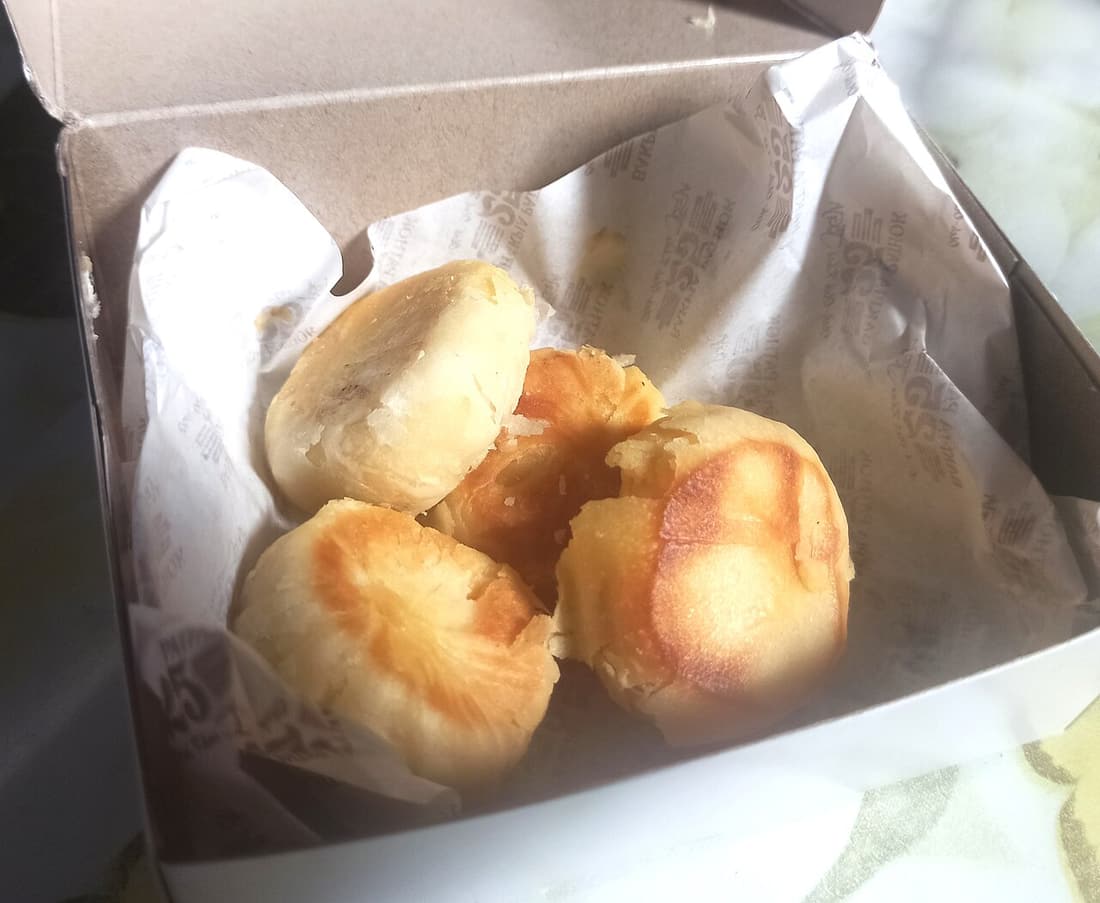 Walking tour with tastings from $17
Yogyakarta: City Highlights Walking Tour with 5 Local Snack Tastings
A two-hour walk in the Malioboro area that pairs the main sights with five tastings of local snacks. Lighter than a full food tour and shorter than a half-day city tour, it suits a morning or late afternoon slot. Review numbers are still small.
- Five local snack tastings included
- Two-hour route through the Malioboro area
- Small number of reviews, high score