Yogyakarta is one of the historic centres of batik, the wax-resist dyeing technique that UNESCO added to its list of Intangible Cultural Heritage in 2009. Malioboro is where most visitors buy it — and where a little knowledge goes a long way.
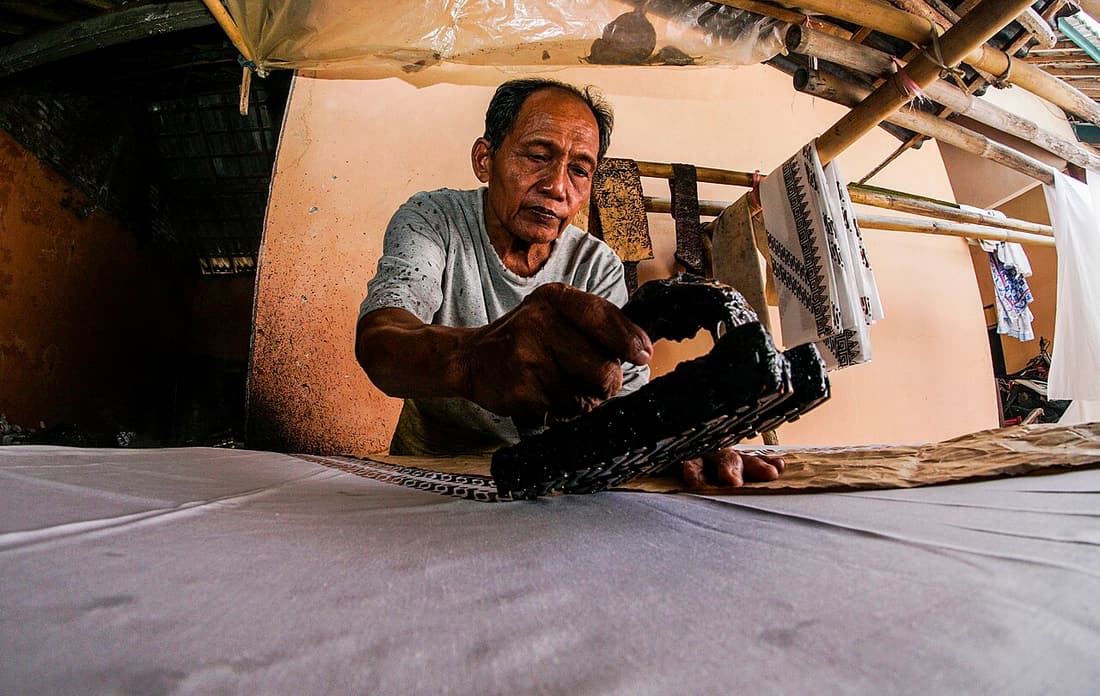
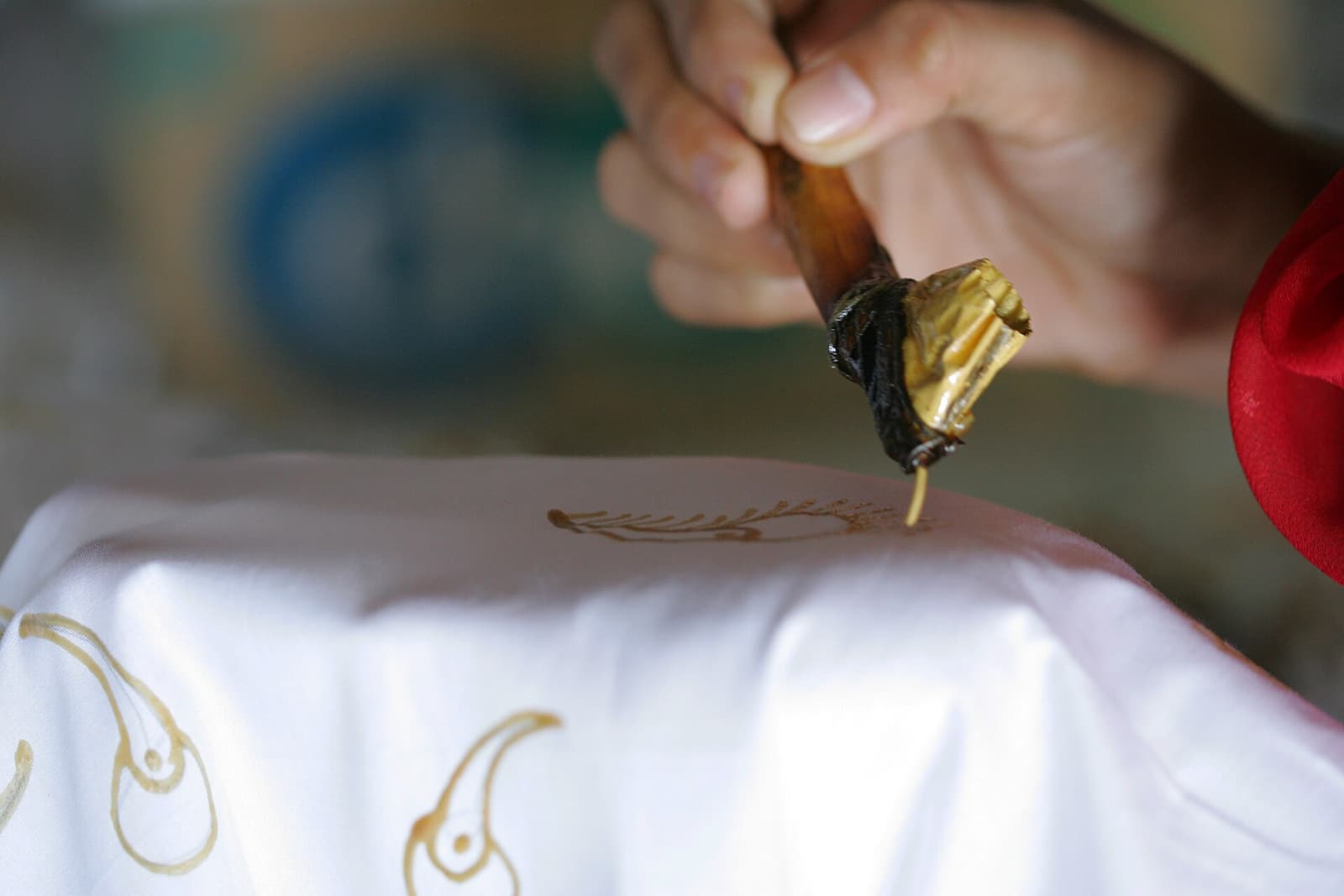
There are three things sold under the name. Batik tulis is drawn by hand with a canting, a small copper-spouted pen filled with hot wax; a single cloth can take weeks or months and is priced accordingly. Batik cap is made by pressing wax onto the cloth with a copper stamp, which is faster and cheaper. Printed “batik” is ordinary textile printed with a batik motif by machine — no wax at all. It is perfectly fine as an inexpensive shirt, as long as you pay a print price for it.
What to see and do: Batik Shopping on Malioboro
Tell tulis from cap from print
Turn the cloth over. Real batik (tulis or cap) is dyed through, so the back is almost as strong as the front; a print is clearly paler on the reverse. Tulis lines wobble slightly and no two motifs are identical; cap repeats in neat blocks with small joins; print repeats perfectly. Wax-made cloth also carries a faint waxy smell.
Start at a fixed-price store
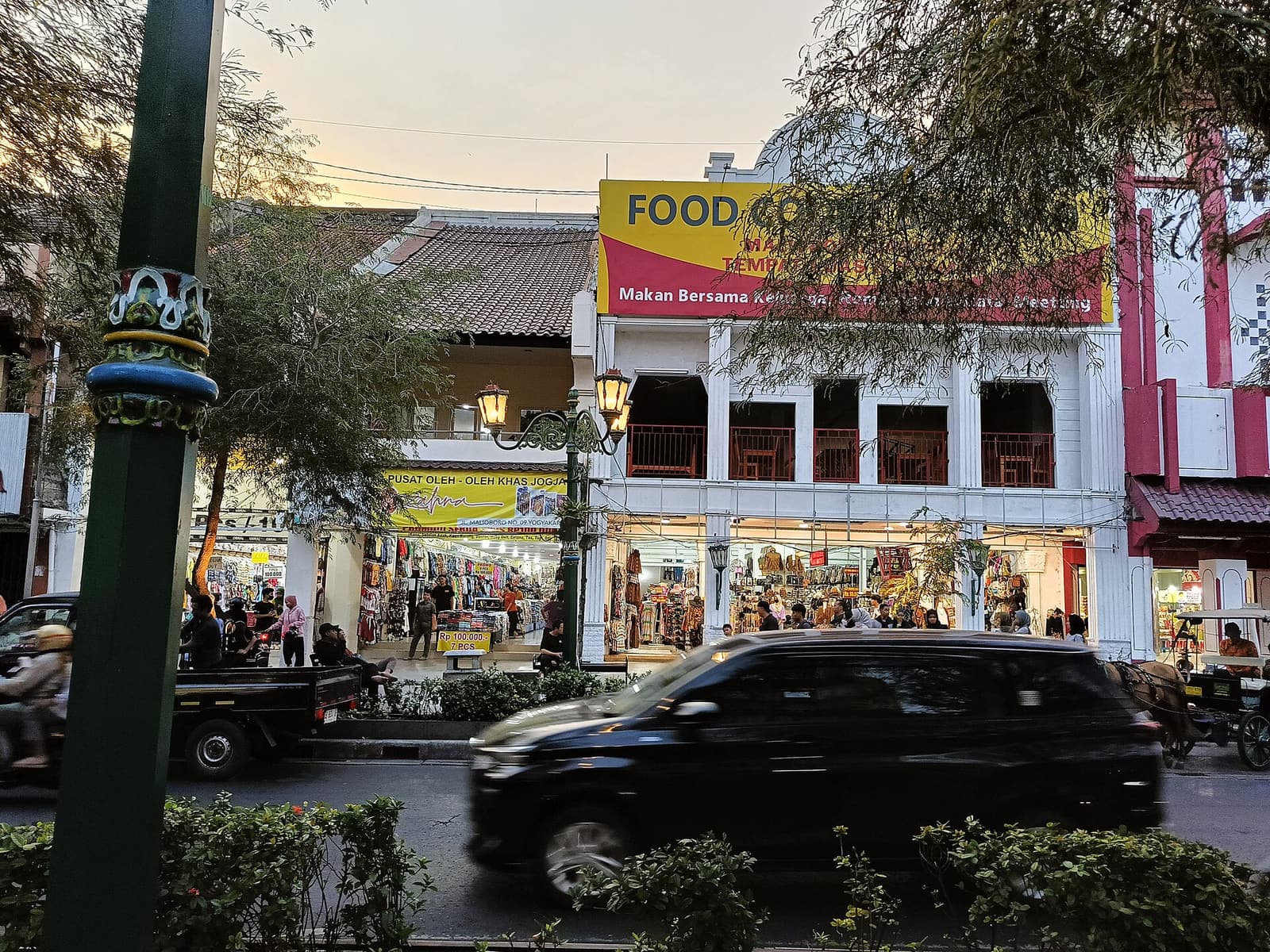
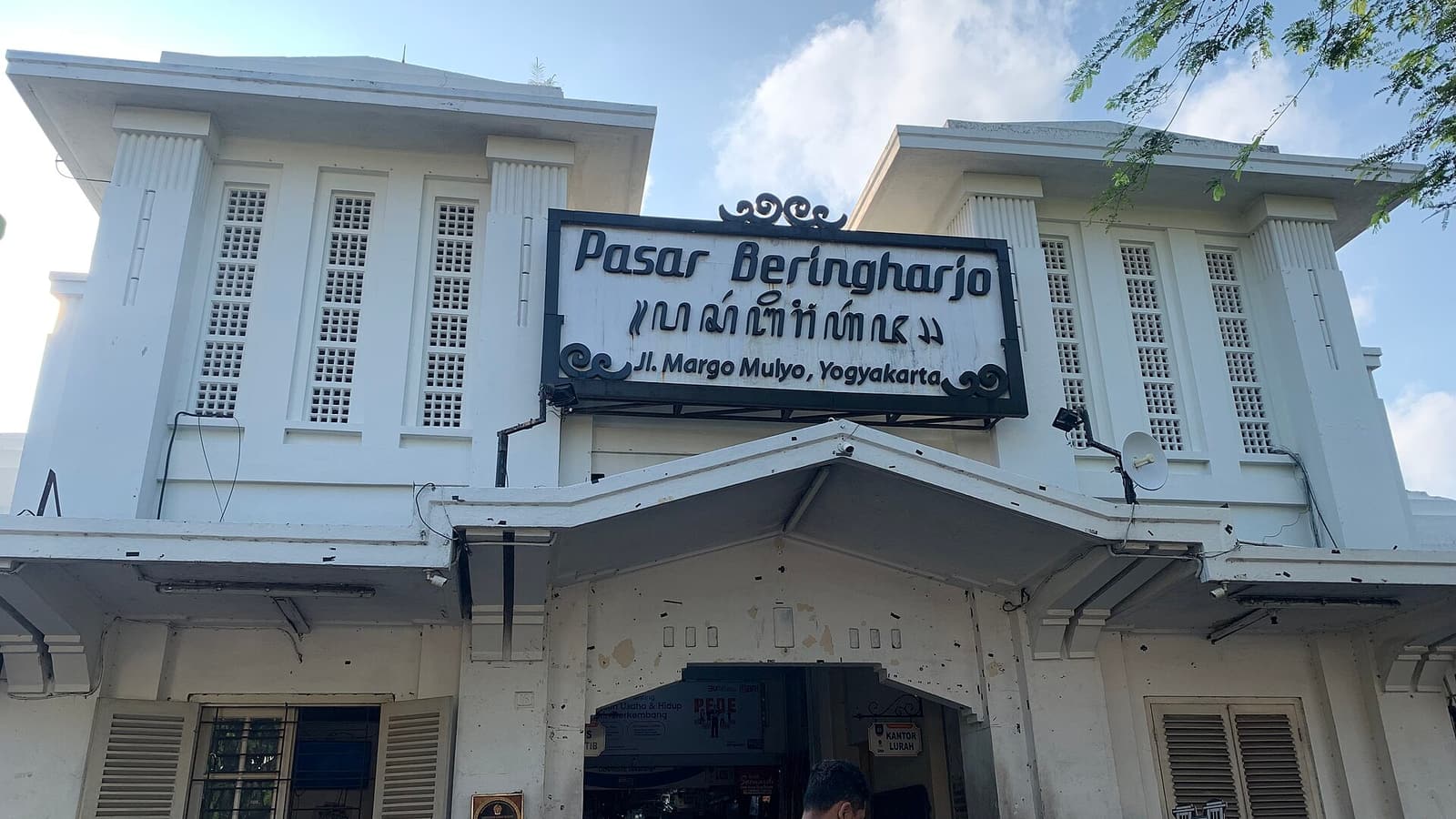
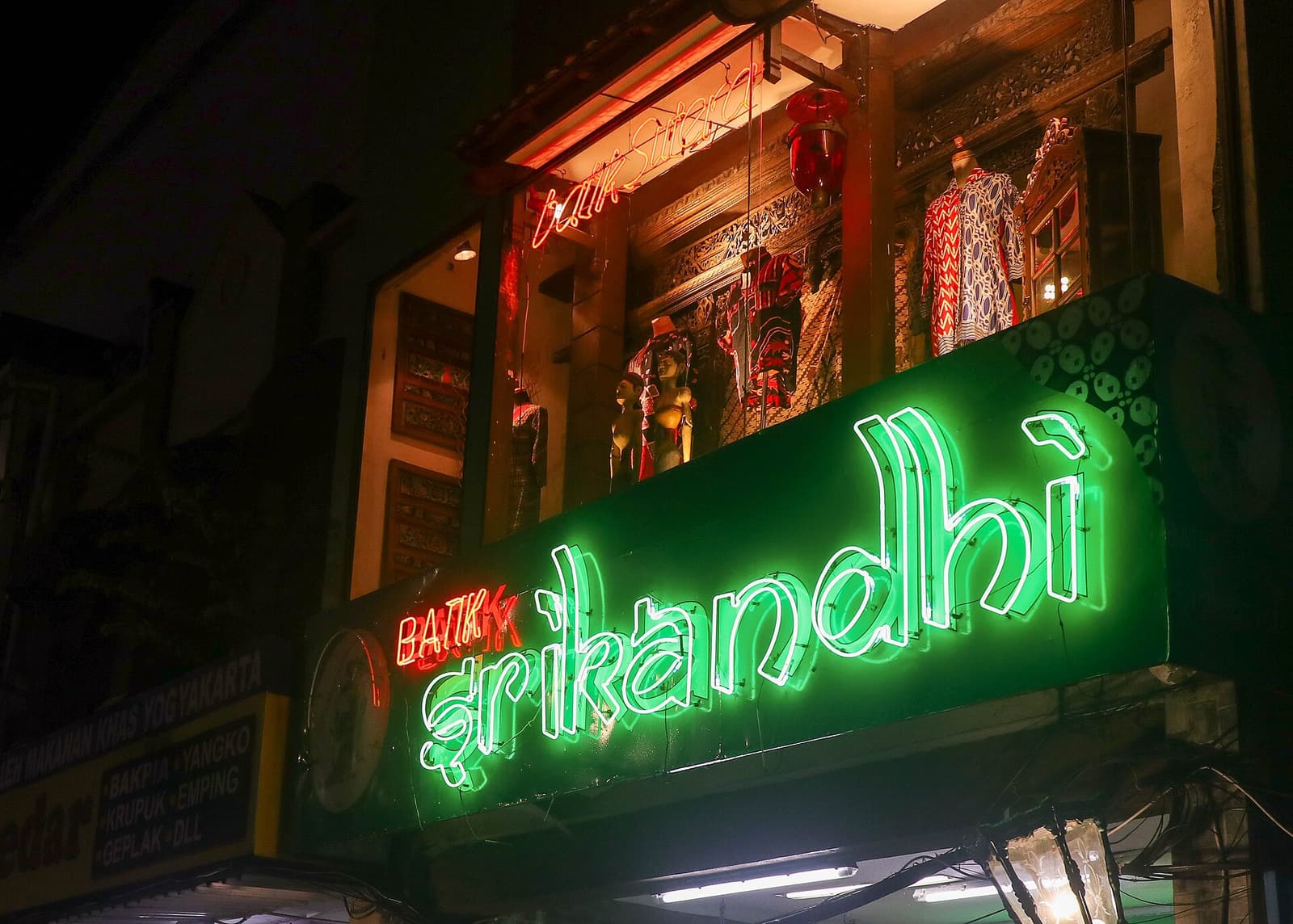
Hamzah Batik (formerly Mirota Batik), opposite Pasar Beringharjo, is a multi-floor emporium of batik, crafts, jamu and snacks with marked prices — a good place to learn what things cost before you bargain elsewhere. Several long-established batik houses also have labelled, fixed-price shops along the street.
Bargain in the market
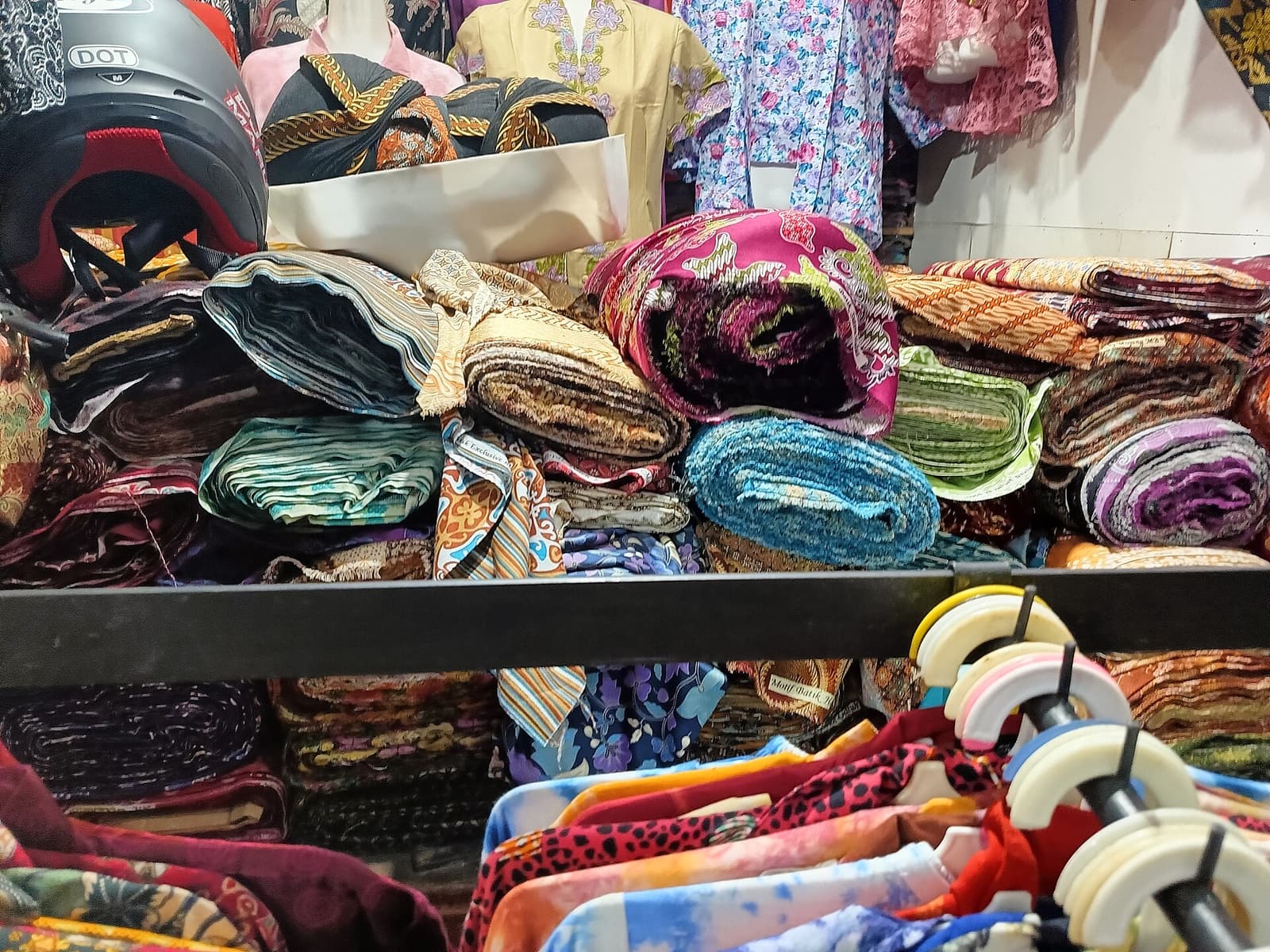
In Pasar Beringharjo and Teras Malioboro, prices are negotiable. Offer around half, smile, and settle somewhere in between; buying several pieces helps.
Make your own
Two hours in a batik class teaches you more about quality than any guide — and you leave with a piece you drew yourself.
How to get to Batik Shopping on Malioboro
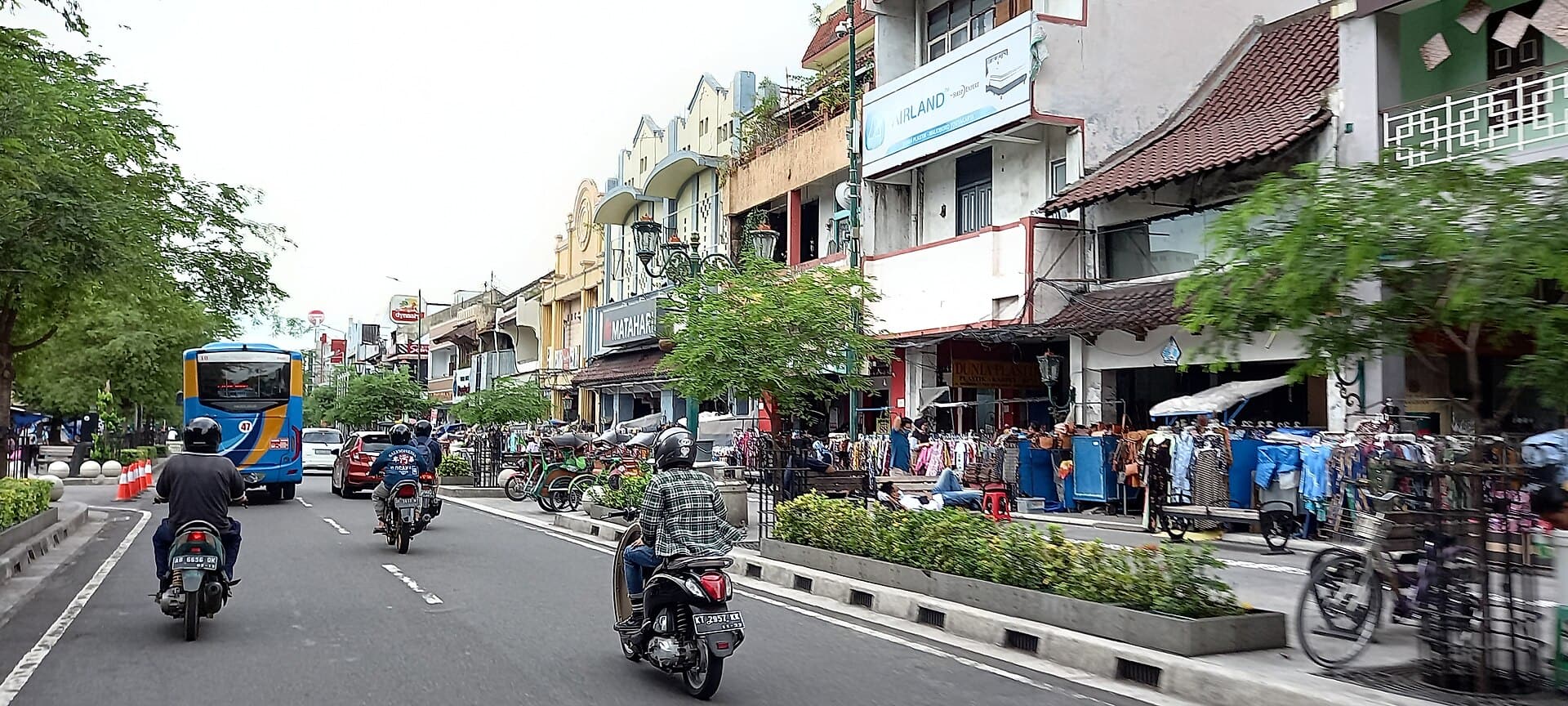
- The batik shops are spread along the whole street, with the densest cluster on the west pavement and in and around Pasar Beringharjo at the southern end.
- Workshops for batik classes are in various kampung around the city; most are a short ride by taxi or ride-hailing from Malioboro.
Insider tips
- The “art school” trick: a friendly stranger tells you a government art school or student exhibition is open “today only” and leads you to a gallery in a back lane. It is a commission shop selling ordinary pieces at inflated prices. Decline politely and keep walking.
- Becak rides offered for a token fare usually include stops at batik and bakpia shops that pay the driver a commission.
- Ask what the cloth is — cotton, rayon or silk — and whether the label says tulis, cap, kombinasi or printing.
- Wash batik by hand in cold water and dry it in the shade.
Best tours & tickets for Batik Shopping on Malioboro
These top-rated experiences are an easy way to enjoy Batik Shopping on Malioboro from a base on Malioboro:
 Hands-on class from $12
Yogyakarta: 2-Hour Batik Making Course with Souvenir
Learn the wax-resist process from a local batik maker: sketch a motif, trace it in hot wax with a canting, dye the cloth and take the finished piece home. After two hours with a canting in your hand you will also be far better at telling hand-drawn batik from a print when you go shopping on Malioboro. Check the listing for the workshop address and whether pickup is offered.
- Draw with hot wax using a canting, then dye your cloth
- Take your own piece of batik home
- The most-reviewed batik class in Yogyakarta
 Hands-on class from $13
Yogyakarta: Contemporary Batik Workshop with Natural Dyeing
A studio workshop with a more contemporary approach: you learn the traditional wax-resist steps, then dye your design with natural colours. Small groups and a very high guest score make it a good alternative when the bigger classes are full.
- Wax-resist technique with natural dyes
- Small-group studio setting
- Top score from dozens of reviews
Half-day class from $26 Yogyakarta: Batik Painting Workshop
The long-form batik class: about five hours, which is enough to design, wax, dye and finish a more ambitious piece than the two-hour courses allow. Choose this if batik is one of your main reasons for coming to Yogyakarta.
- A longer session with time to finish a larger piece
- Guidance through every step of waxing and dyeing
- Perfect score from around ninety reviews