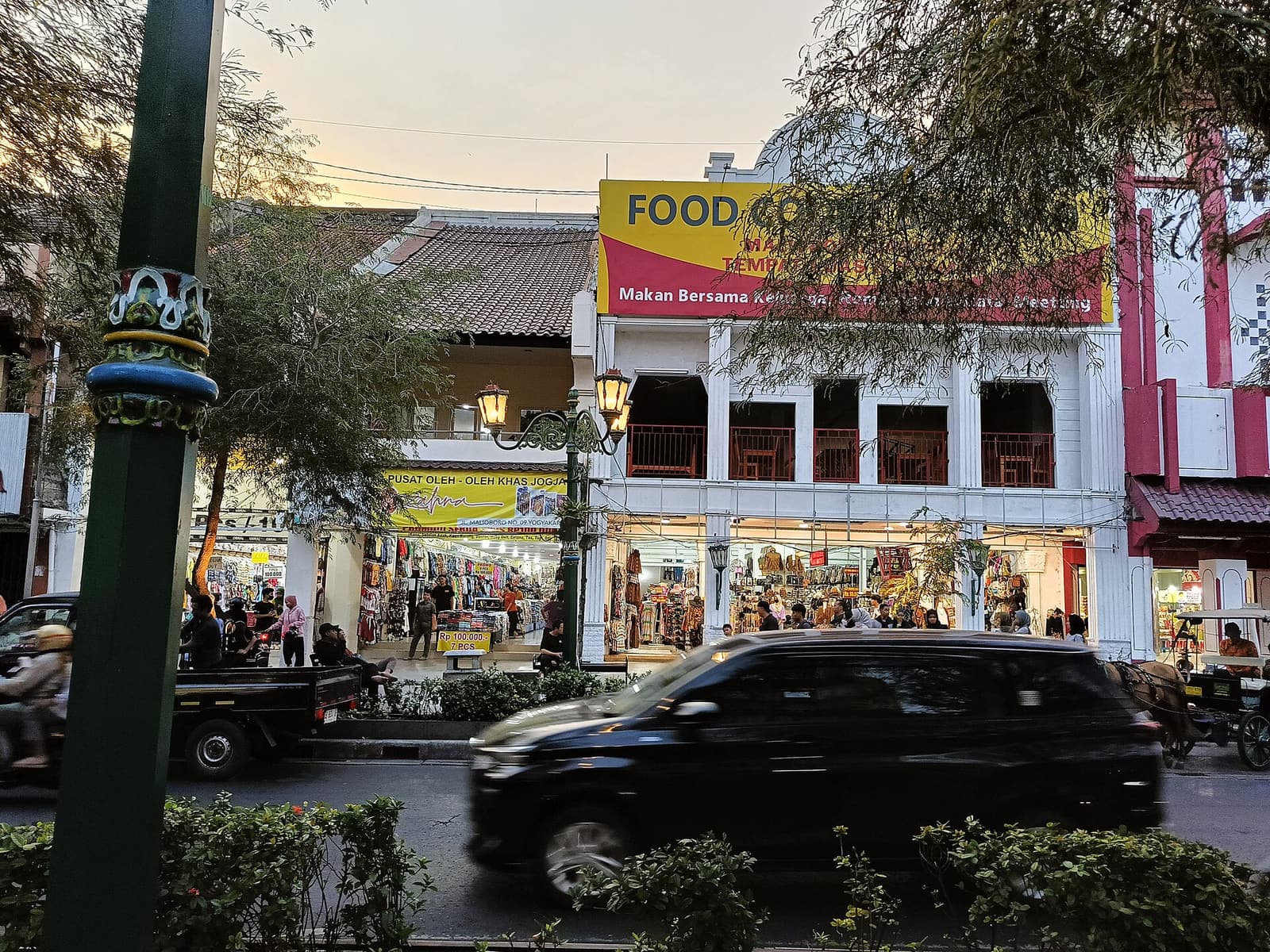
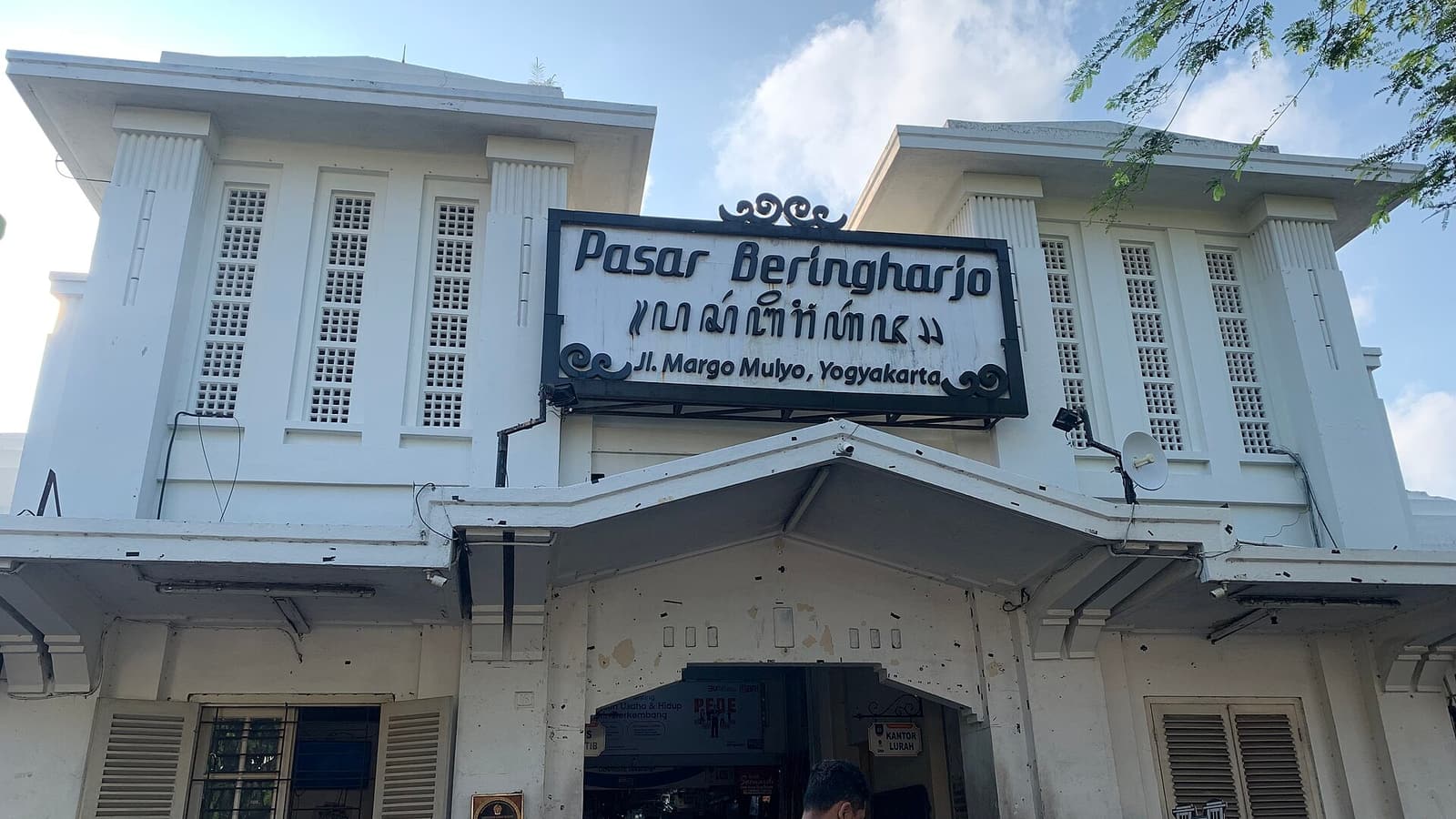
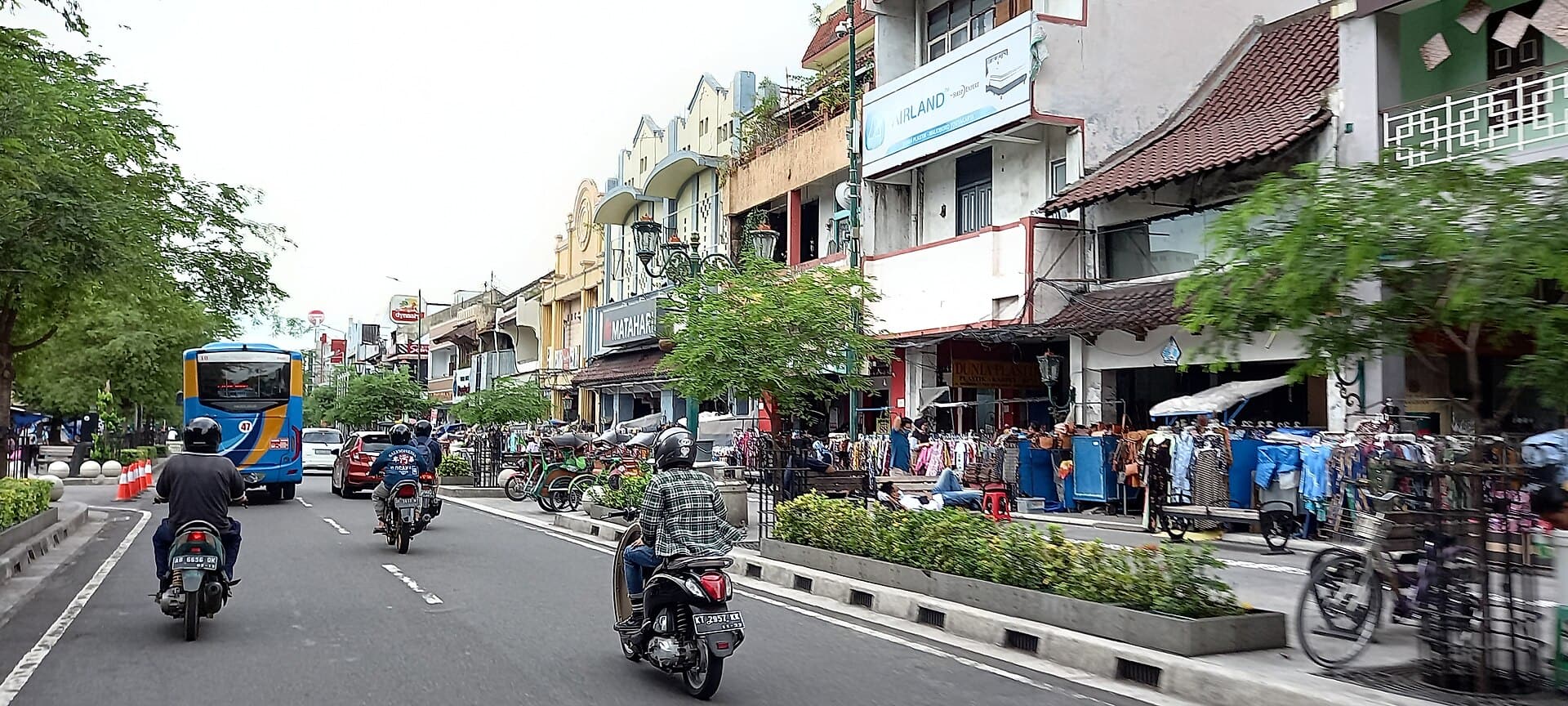
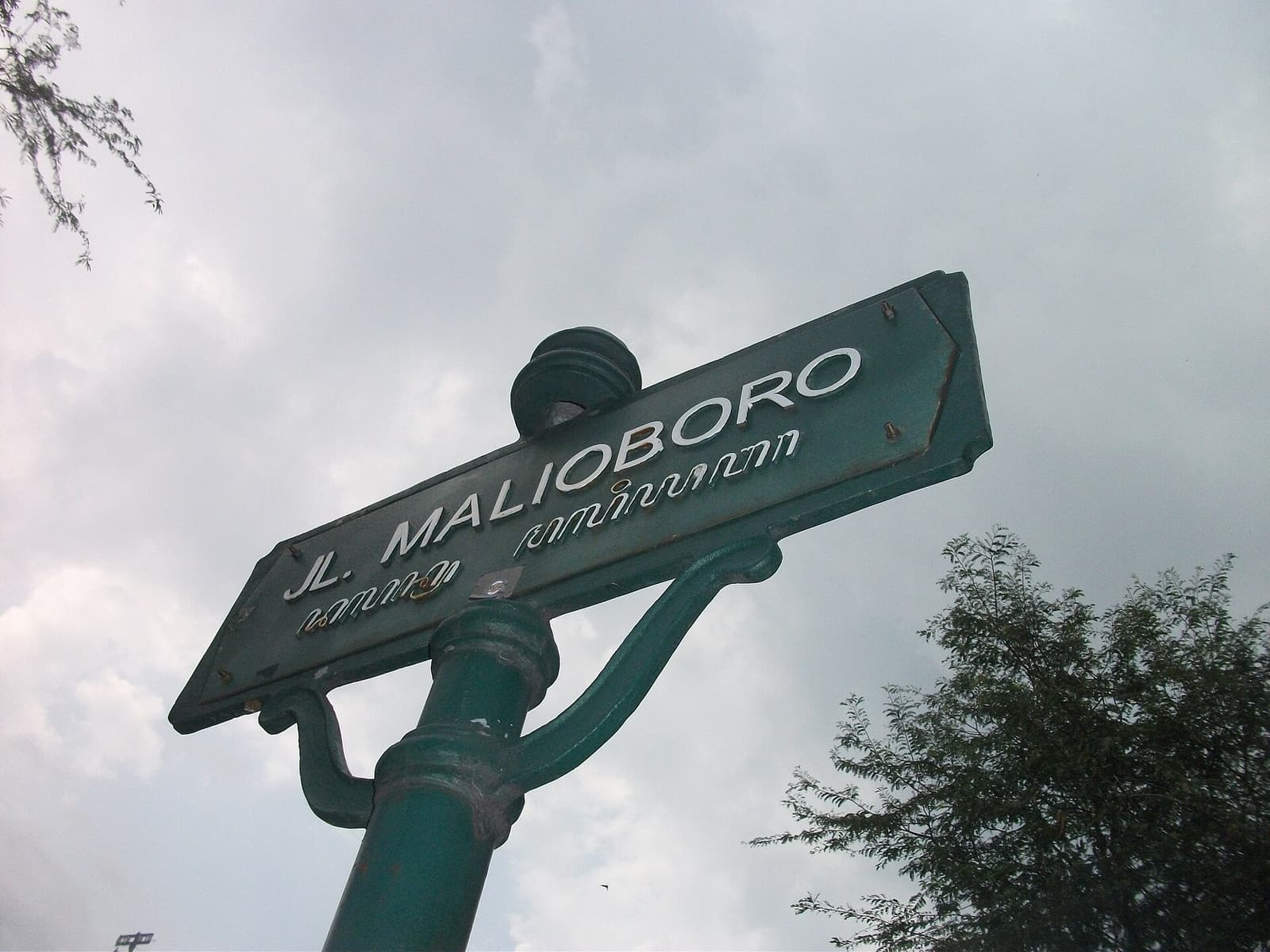
Malioboro Street (Jalan Malioboro) is the main street of Yogyakarta and one of the best-known streets in Indonesia. It runs dead straight from the railway line beside Tugu station southwards for roughly a kilometre; the same line continues under the name Jalan Margo Mulyo past Pasar Beringharjo to the crossroads of Titik Nol Kilometer, and on to the Kraton.
The street is more than a shopping strip. It was laid out in the 18th century as the ceremonial road of the new sultanate, part of a straight line that links Mount Merapi, the Tugu monument, the palace and the Indian Ocean. In 2023 that line — “the Cosmological Axis of Yogyakarta and its Historic Landmarks” — was added to the UNESCO World Heritage List. Where the name comes from is debated: a common explanation links it to a Sanskrit word for a road hung with garlands, another to the English Duke of Marlborough.
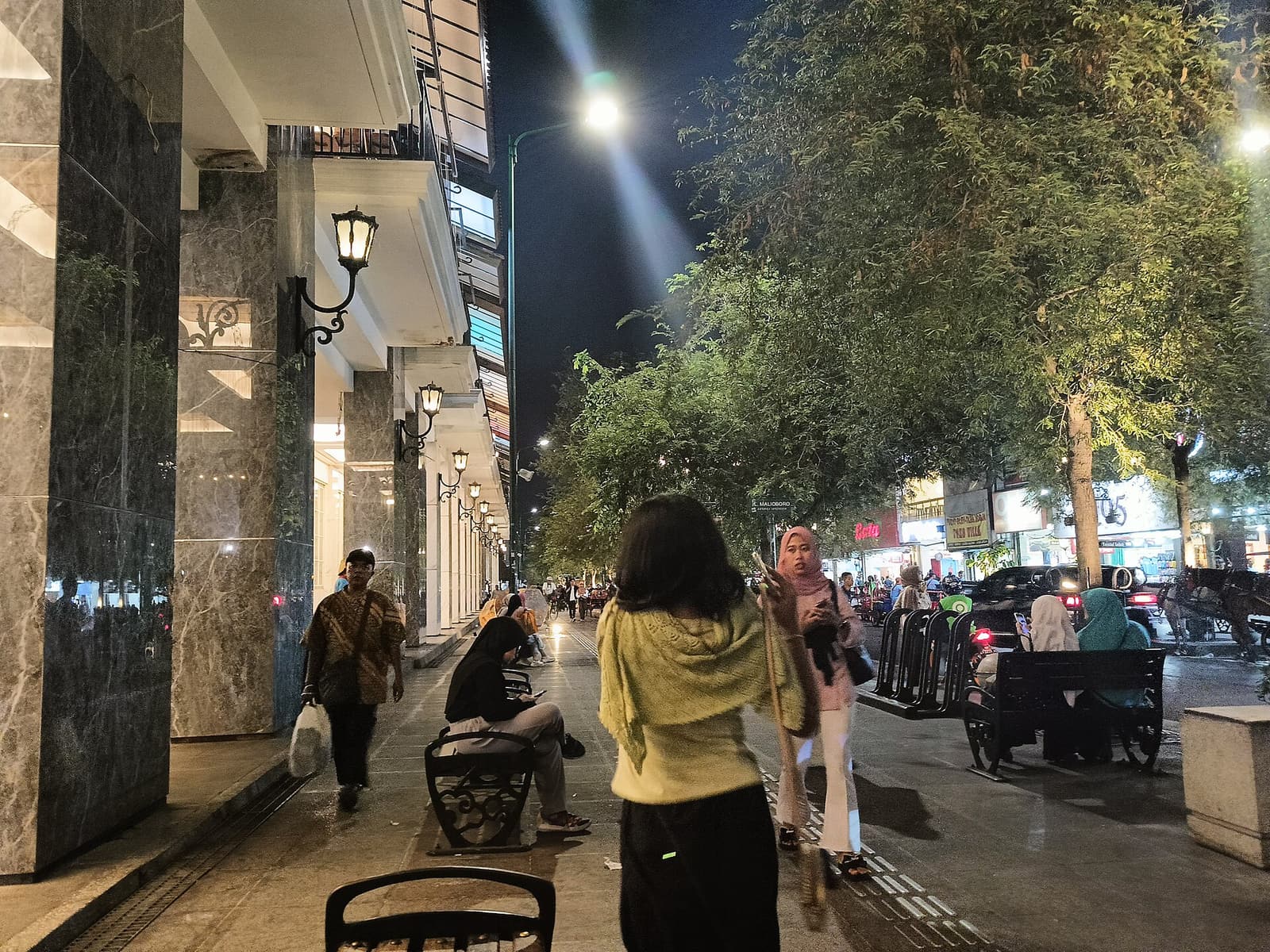
For years the arcades were lined with pavement traders. In 2022 the city moved them off the walkways into purpose-built markets called Teras Malioboro, leaving wide, tidy pavements with benches and street art. Arrangements for the traders have changed more than once since, so treat any description — including ours — as a snapshot and look for current signs.
What to see and do: Malioboro Street
Walk it end to end
Start at the railway crossing by the station and walk south. Allow 20 minutes without stops and a couple of hours with them. The west pavement has most of the batik shops; the east side has the mall, the government buildings and the gate to Ketandan.
Come back after dark
From late afternoon the street changes character. On most evenings it is closed to private motor traffic for a few hours — typically from around 18:00 to 21:00, though the hours are adjusted from time to time — and becomes a promenade of families, buskers and food sellers.
Listen to the street musicians
Groups playing angklung and other bamboo instruments set up on the pavement most evenings and draw dancing crowds. A small note in the box is appreciated.
Ride a becak or an andong
Cycle rickshaws (becak) and horse carriages (andong) wait all along the street. Agree the price and the route before you get in, and be clear if you do not want shop stops.
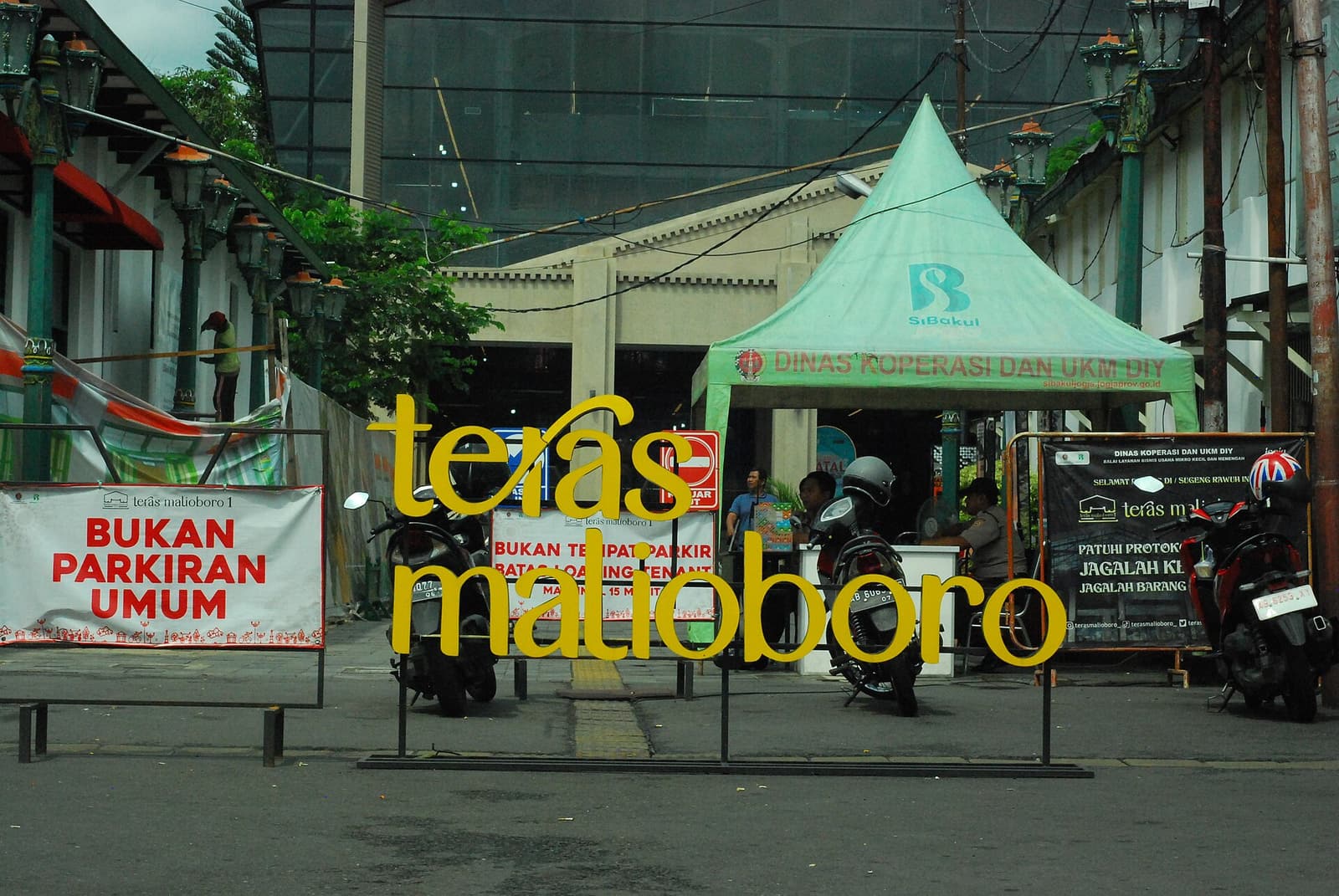
Browse Teras Malioboro
The relocated pavement traders sell batik shirts, T-shirts, sandals, bags and souvenirs in covered markets. Teras Malioboro 1 stands opposite Pasar Beringharjo; the second group of traders has been moved between sites, most recently to buildings in the Ketandan and Beskalan lanes just off the street.
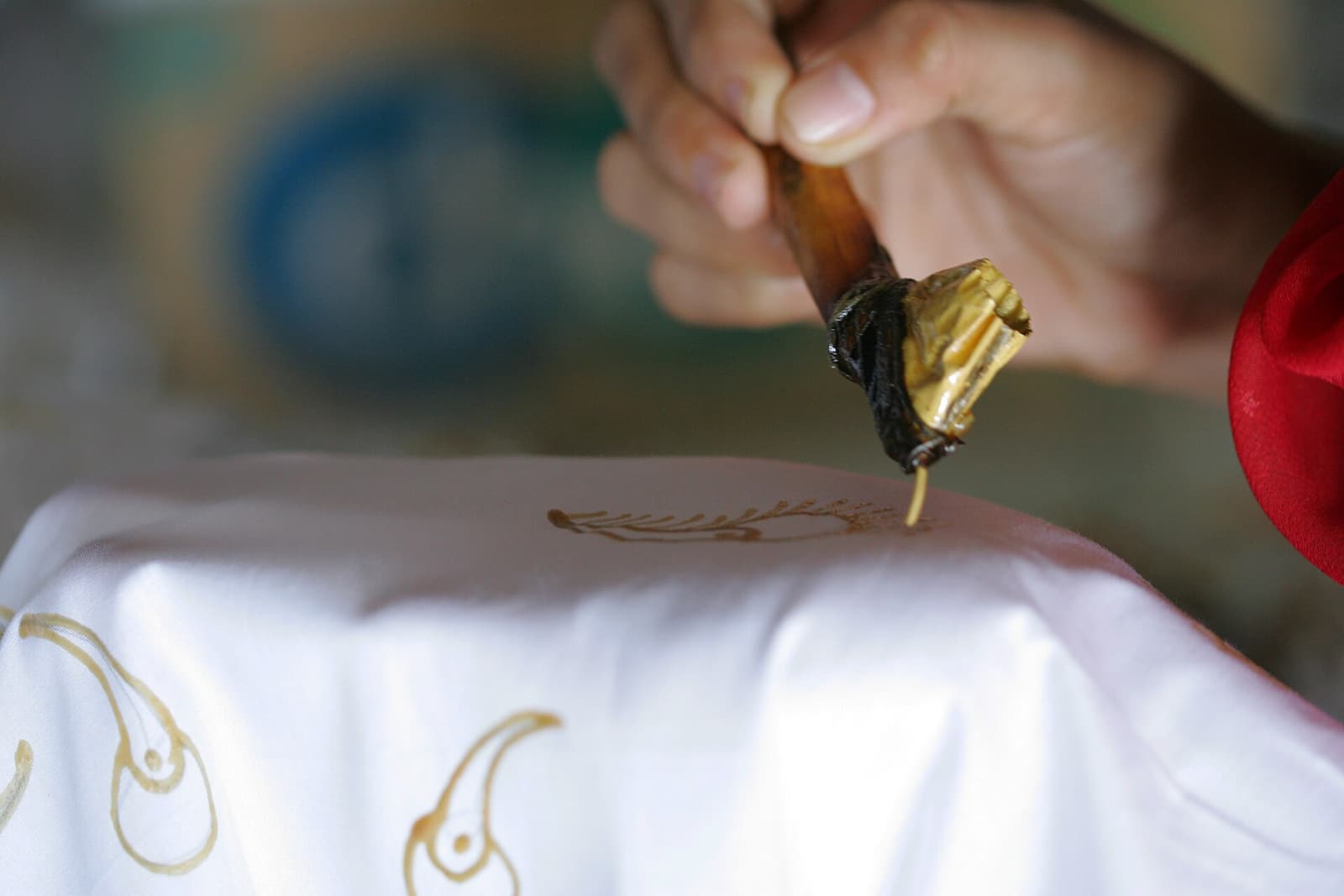
Shop for batik
From fixed-price department stores to market stalls — see our batik shopping guide before you buy.
How to get to Malioboro Street
- By train: Yogyakarta (Tugu) station is at the north end; leave by the south exit on Jalan Pasar Kembang and you are a few minutes’ walk from the top of the street.
- From the airport: the airport train from YIA runs to Tugu station. See getting to Malioboro.
- By bus: Trans Jogja buses stop at several shelters along the street.
- By car or ride-hailing: traffic is one-way southbound and slow; get dropped in a side street during the evening closure.
Insider tips
- Evenings are cooler and far more atmospheric than midday.
- Weekends and school holidays are extremely crowded; watch your phone and wallet.
- Parking for cars and motorbikes is in designated areas such as Abu Bakar Ali at the north end, not on the street.
- On Selasa Wage — a day that recurs every 35 days in the Javanese calendar — the street is usually kept free of traffic and many traders rest.
Best tours & tickets for Malioboro Street
These top-rated experiences are an easy way to enjoy Malioboro Street from a base on Malioboro:
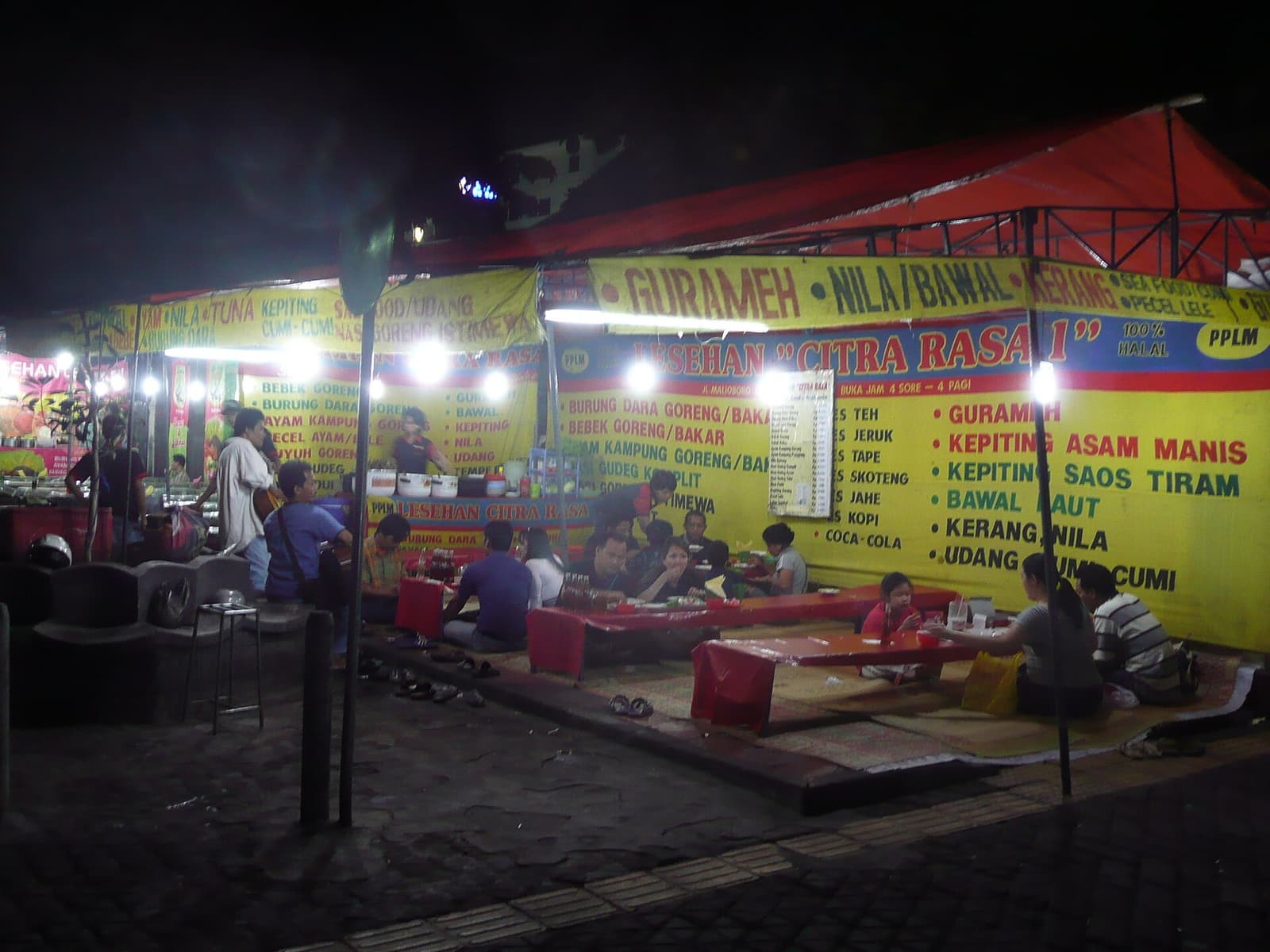 Evening food walk from $15
Yogyakarta: Nighttime Walk and Food Tour
An evening walk through the centre of Yogyakarta with a local guide who orders for you at street stalls and small warungs, explains what you are eating and takes you down lanes you would not find alone. With several hundred reviews and a top score, it is the easiest way to get past the tourist-priced stalls and try the real thing. Check the listing for the exact meeting point and which tastings are included.
- Street food tastings with a local guide after dark
- The most-reviewed food tour in Yogyakarta on GetYourGuide
- Evening is when the Malioboro area is at its liveliest
 Walking tour from $9
Yogyakarta: 2-Hour City Introduction Walking Tour
A compact introduction to the city on foot: two hours with a local guide covering the background you need — the sultanate, the layout of the old town and how to get around — before you explore on your own. One of the cheapest guided experiences in Yogyakarta and well reviewed.
- A short, low-cost orientation walk
- History and daily life explained by a local
- Easy to fit in on arrival day
 Heritage walking tour from $17
Yogyakarta: Malioboro Heritage Walking Tour with Storyteller
One of the few GetYourGuide products built specifically around Malioboro Street: a storyteller-led walk past its colonial-era buildings, markets and kampung lanes. It is a recent listing with only a handful of reviews, so read the latest feedback before booking — but if the street’s history is what you came for, this is the closest match.
- A walk devoted to Malioboro itself
- Stories behind the buildings and side lanes
- A newer product with few reviews so far